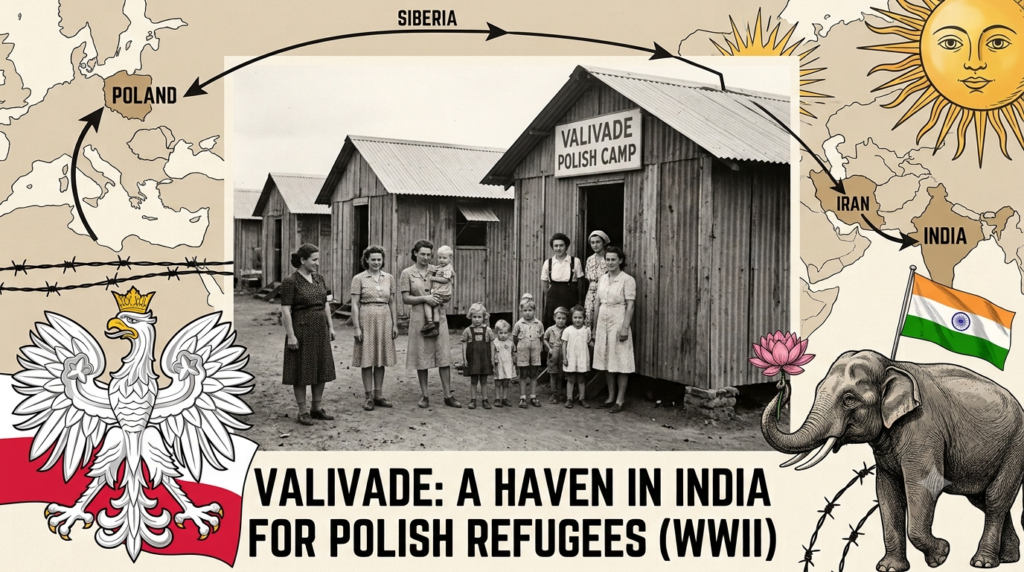
A Personal Memory That Linked India and Poland
Sometimes, a single conversation can uncover a forgotten chapter of history and change the way we see two countries. My journey into the remarkable story of Polish refugees in India began unexpectedly, in a small shop in my hometown of Kolhapur, Maharashtra, just before I moved to Poland four years ago.
I had gone to the shop to buy a few things. While I was chatting with my friend, the shop owner asked me where I was planning to move. “Poland,” I replied. His response surprised me. Instead of simply asking about my plans, he began explaining the historical connection between Poland and Kolhapur. He told me that, during the Second World War, India had opened its doors to Polish refugees and that Kolhapur had played an important role in offering them shelter.
Then came a remark I had never expected. He suggested that Polish people might hold Indians in special regard because of this shared history. I listened with curiosity, but I was also astonished. Before that conversation, I had hardly known that my hometown was connected to Poland in such a meaningful way.
Four years later, living in Poland, I often look back on that conversation. The warmth and kindness I have experienced here have deepened my interest in the history connecting Poland and India. I realised that this little-known chapter of history was unfamiliar to many people in both countries, and I wanted to share it with them.
What began as an ordinary conversation before my move to Poland became a meaningful discovery of how war, compassion, and the search for safety brought two distant countries together. As I prepared to leave Kolhapur for a new life in Poland, I never imagined that my hometown and my new home already shared such a meaningful history.
How World War II Brought Polish Refugees to India
To understand how Kolhapur became connected with Poland, we need to go back to the Second World War.
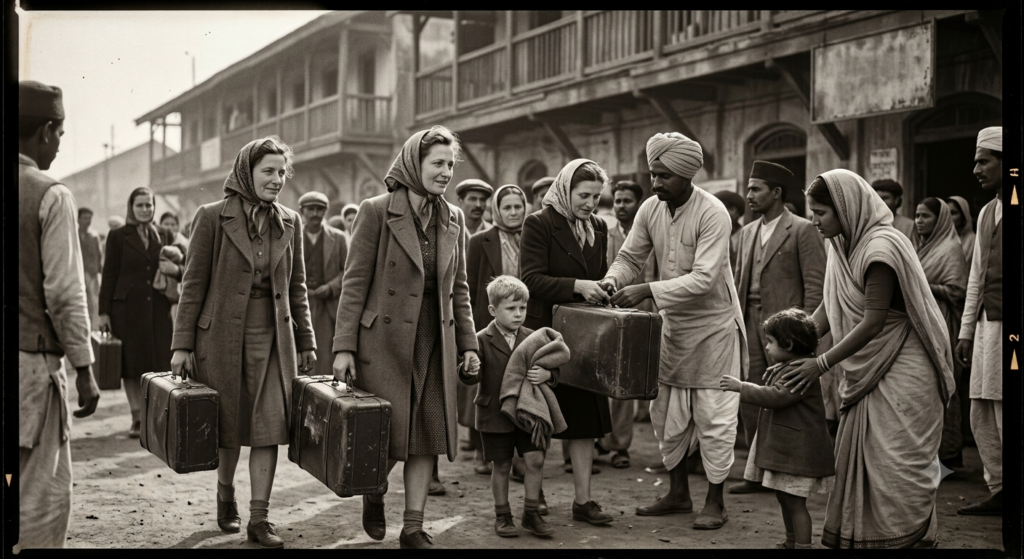
In September 1939, Nazi Germany invaded Poland, followed by the Soviet invasion of eastern Poland later that month. The war brought immense suffering to the Polish people. Many families lost their homes, and thousands of Polish citizens were deported to the Soviet Union, where they endured extremely difficult conditions.
Following an agreement between the Polish government-in-exile and the Soviet Union in 1941, many Polish citizens were released from Soviet captivity. Some travelled through Iran, while others eventually reached India in search of safety and shelter.
At a time when these families desperately needed refuge, Indian rulers, officials, and local communities helped Polish women, children, and other civilians find shelter far from their homeland.
These acts of support laid the foundation for a remarkable chapter in India–Poland relations. The connection grew not only through official relations between countries but also through the compassion and kindness shown by people who helped others during a time of crisis.
The Good Maharaja Who Helped Polish Children
What would you do if children from a distant country arrived in your land after losing their homes and being separated from their families by war? During the Second World War, one Indian ruler responded with extraordinary kindness.
Maharaja Digvijaysinhji Ranjitsinhji Jadeja, the ruler of Nawanagar in present-day Gujarat, welcomed Polish children fleeing the hardships of war. Today, he is fondly remembered in Poland as the Good Maharaja.
At Balachadi, near Jamnagar, the children received shelter, food, education, and medical care. The Maharaja helped create an environment where they could recover from their difficult experiences and continue their childhood far from home.
Imagine being a child forced to leave everything familiar behind—your home, your friends, and the country where you grew up. In such circumstances, practical support matters, but so do kindness, security, and a sense of belonging. The care offered by the Maharaja helped provide these comforts during an uncertain period in the children’s lives.
His generosity is still remembered in Warsaw. A public square named Skwer Dobrego Maharadży, meaning Square of the Good Maharaja, honours his contribution to the lives of Polish children.
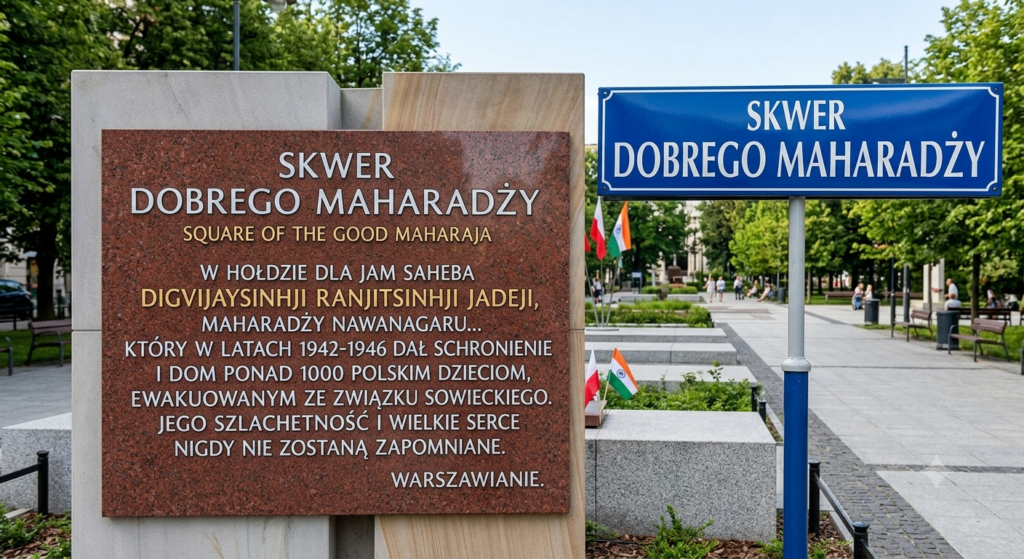
His story demonstrates how one person’s compassion can cross national borders and remain part of another country’s collective memory.
Valivade: The Polish Refugee Settlement Near Kolhapur
While the Good Maharaja’s contribution is widely remembered, my hometown of Kolhapur has its own remarkable place in this history.
Imagine leaving your homeland because of war and finding a temporary home thousands of kilometres away. For thousands of Polish refugees, Valivade, a village near Kolhapur in Maharashtra, became a place of shelter and a new beginning. It offered them an opportunity to rebuild their daily lives far from their homeland.
Between 1943 and 1948, Valivade accommodated around 5,000 Polish refugees, making it one of the largest Polish refugee settlements in India during the Second World War. Its favourable climate was one of the reasons this location was selected. According to CNBCTV18.com, “Valivade was chosen due to its favourable climate, located about 500 km south of Mumbai. It was expected to provide a better living environment compared to harsh conditions in other regions.”
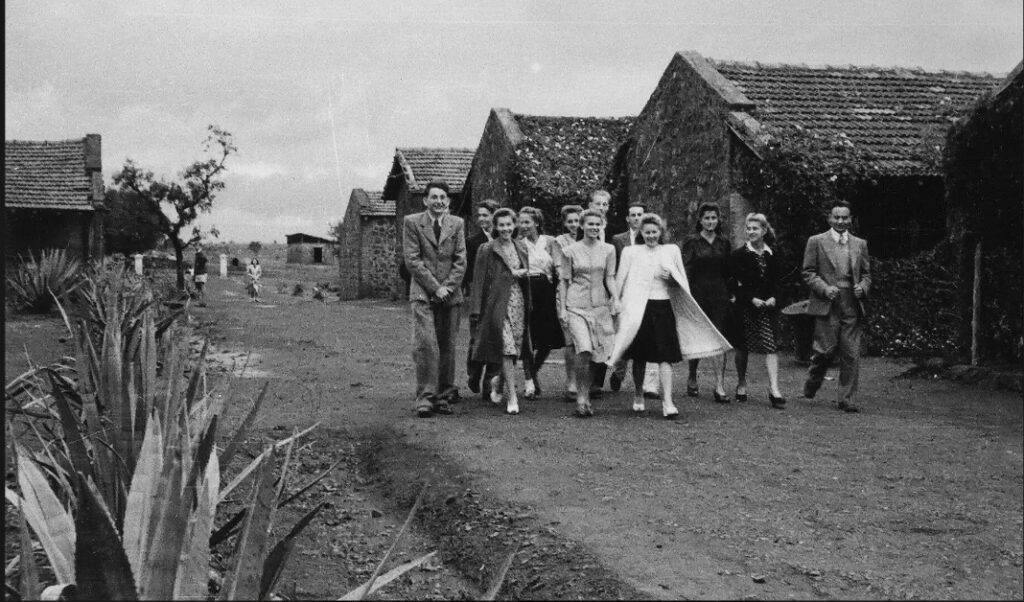
With a suitable environment and a place to call home, the refugees gradually established a community where they could rebuild their daily lives. Valivade was much more than a place to stay. It developed into a community with schools, a hospital, a church, a library, shops, workshops, and cultural activities.
The refugees also worked to preserve their language, traditions, and cultural identity. Through educational and recreational activities, they maintained a sense of community that many would remember long after leaving India.
For these families, Valivade provided temporary stability during a period of great uncertainty. It offered them a safer place to live while their homeland continued to suffer the effects of war.
The experiences of former residents became part of family memories passed down through generations. Their descendants continue to take an interest in Valivade and the place where their parents or grandparents once found refuge.
As a native of Kolhapur, this history holds special meaning for me. Learning that my hometown became a place of safety for thousands of Polish people has given me a deeper appreciation of its role in the story of India–Poland friendship.
Remembering Kolhapur’s Support for Polish Refugees
The connection between Kolhapur and Poland is not confined to historical accounts. It is also remembered through public memorials that recognise the support offered to Polish refugees during the Second World War.
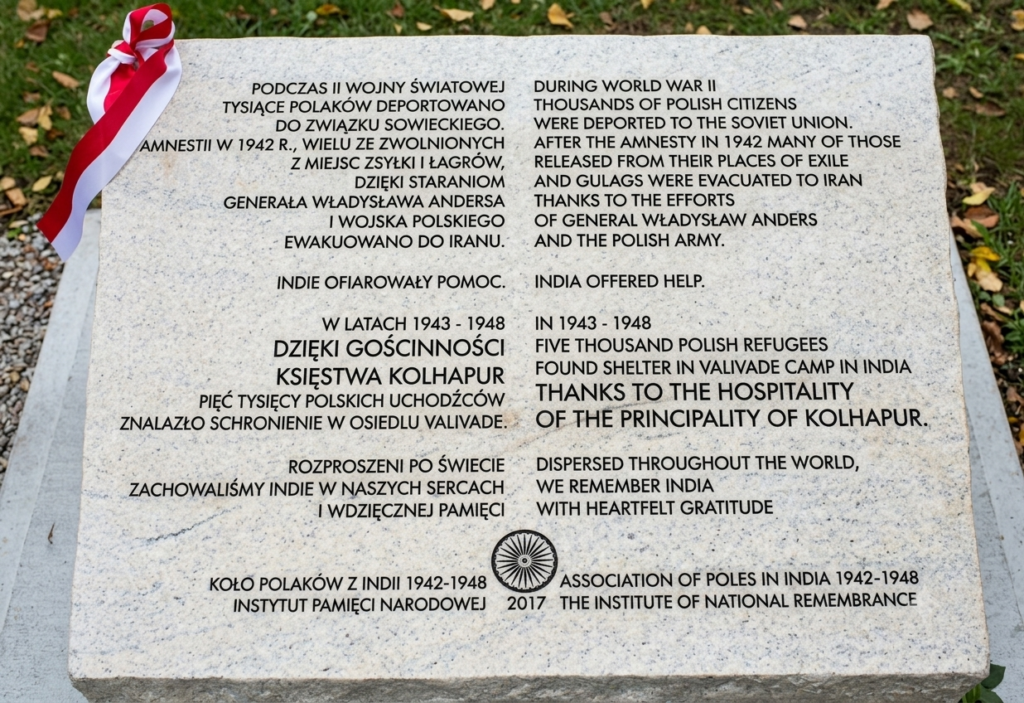
In Warsaw, the Kolhapur Memorial honours Kolhapur’s contribution to providing shelter for Polish refugees. The settlement at Valivade became a temporary home for thousands of displaced Polish people, offering them safety far from their homeland. In an article published in The Times of India, Dnyaneshwar Mule wrote, “The State and people of Kolhapur welcomed them with affection and love and treated these guests with utmost dignity.” These words reflect the hospitality extended to Polish refugees by the people of Kolhapur.
In August 2024, Indian Prime Minister Narendra Modi visited the memorial and paid tribute to this historical connection. He also met former residents of the Valivade settlement and their descendants, bringing renewed attention to this important chapter of India–Poland relations.
Warsaw also has a separate memorial honouring the Good Maharaja of Nawanagar, whose contribution is described in an earlier section. The two memorials recognise different acts of generosity that helped strengthen the historical ties between India and Poland.
For me, it is meaningful to know that my hometown is remembered in Poland, the country where I now live. This connection makes the shared history of Kolhapur and Poland especially close to my heart.
Keeping the History of Valivade Alive
The history of Valivade continues to attract interest from Polish representatives, former residents, and their descendants. Their visits help bring attention to the settlement and introduce its story to people who may be discovering this historical connection for the first time.
Photographs, letters, personal accounts, and historical documents offer valuable insights into everyday life in Valivade. Preserving these records is important not only for historians but also for families seeking to understand their connections to the settlement.
There have also been discussions about developing a Museum of Humanity and Peace at Valivade. If established, such a museum could preserve the settlement’s history and help visitors understand the experiences of Polish refugees and the people who welcomed them.
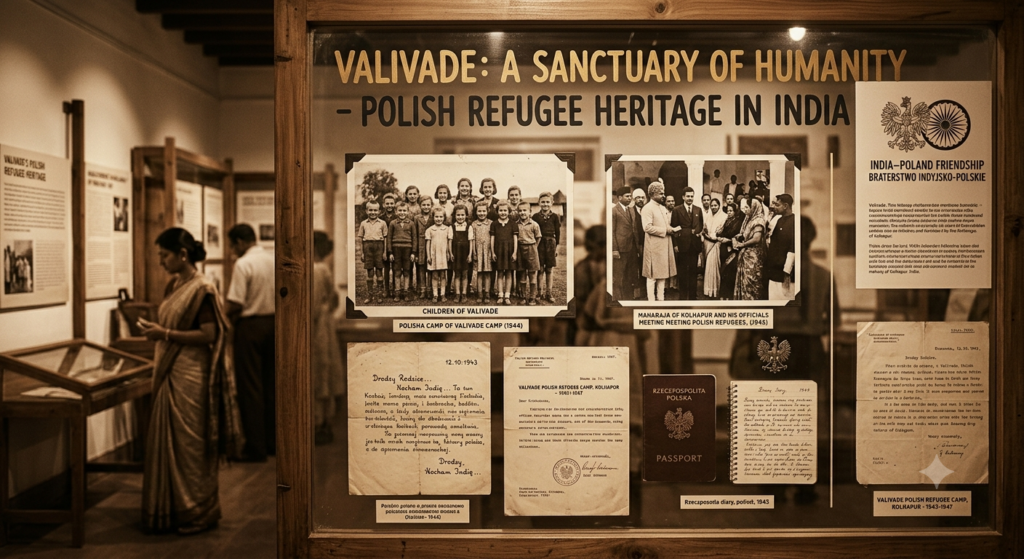
For Kolhapur, a museum of this kind could provide an opportunity to share an important part of its past with a wider audience. For Polish visitors and descendants of former residents, it could offer a place to explore family memories and reconnect with a significant chapter of their heritage.
I hope that efforts to preserve Valivade’s history continue so that future generations in both India and Poland can learn about the people who lived there and the kindness and friendship that connected the two countries.
A Shared History, A Lasting Friendship
The story of Polish refugees in India is a powerful reminder that humanity can bring people together even in the darkest times. It shows how compassion, courage, and generosity can build bonds that last for generations.
For me, this history connects two places close to my heart: Kolhapur, my hometown, and Poland, where I have lived for the past four years. I feel proud that my hometown became a place of refuge for Polish families during the Second World War. Discovering this history has given me a deeper appreciation of the connection between India and Poland.
When Polish people were forced to leave their homeland and faced an uncertain future, India offered them shelter, dignity, and hope. This was more than an act of hospitality; it was a deeply humanitarian response to the suffering of fellow human beings. Poland’s continued remembrance of this support reflects how meaningful that kindness has remained across generations.
The stories of Valivade and the Good Maharaja remind us that the true value of humanity lies not in our differences, but in how we treat one another when life becomes difficult. We may belong to different nations, speak different languages, and follow different traditions, but our shared humanity connects us all. Helping people in times of suffering is not merely an act of kindness; it is a responsibility we share as human beings.
The friendship between India and Poland carries a message that remains relevant today: when people are in need, compassion should rise above borders, differences, and distance. The support offered to Polish refugees by India became a legacy of gratitude and friendship—one that reminds future generations that even in the darkest chapters of history, humanity can offer hope and create bonds that never fade.
References:
- CNBCTV18.com. “What Is the Connection Between Poland and Kolhapur?” CNBCTV18, https://www.cnbctv18.com/india/what-is-the-connection-between-poland-and-kolhapur-19463019.htm. Accessed 16 Oct. 2026.
- Mulay, Dnyaneshwar. “The Kolhapur Connection: A Moving Chapter of India-Poland Relations.” The Times of India, 21 Aug. 2024, https://timesofindia.indiatimes.com/blogs/voices/the-kolhapur-connection-a-moving-chapter-of-india-poland-relations/. Accessed 14 Oct. 2026.
Related Articles
If you enjoyed this article, you may also like:
India vs Poland: 10 Fascinating Cultural Differences I Discovered After Moving to Poland
It’s really memorable article out of all previous articles as it highlights the relation of Kolhapur with Poland.
Still I remember when I was in Kolhapur… number of tourists visits our district out of which Polish were greater in number and one of the good acquainted used to guide them by using their own language…. I am talking about the memories of nearly three decades ago.