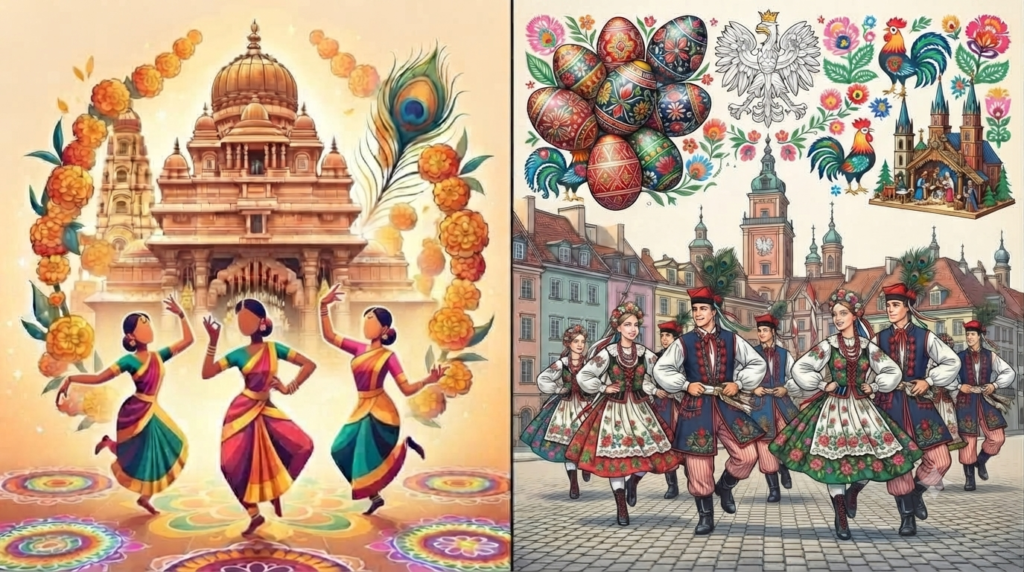
Moving from India to Poland gave me an opportunity to experience a culture different from the one I had grown up with. Some cultural differences were immediately visible, while others became noticeable only after spending more time here.
Culture influences many ordinary parts of life, including family, communication, food, parenting, work, and social behaviour. I also discovered that some assumptions about Polish society do not always match reality. For example, family remains important, people are helpful, and communities come together during celebrations, even if they express these values differently from what I was familiar with in India.
In this article, I share ten cultural differences I have noticed through my experience of living in Kraków, Poland.
Family and Relationships
Family is important in both India and Poland, but family relationships and living arrangements can differ.
In Poland, families often spend time together during weekends, holidays, and birthdays. However, adult children commonly establish their own households and live separately from their parents. Personal space and independence are generally valued, even when family members maintain close relationships.
In India, living with parents or extended family members under one roof is common in many communities, although nuclear families are also widespread. Parents and grandparents may play an active role in family decisions, including marriage and children’s futures. Arranged marriages also remain common in many Indian families.
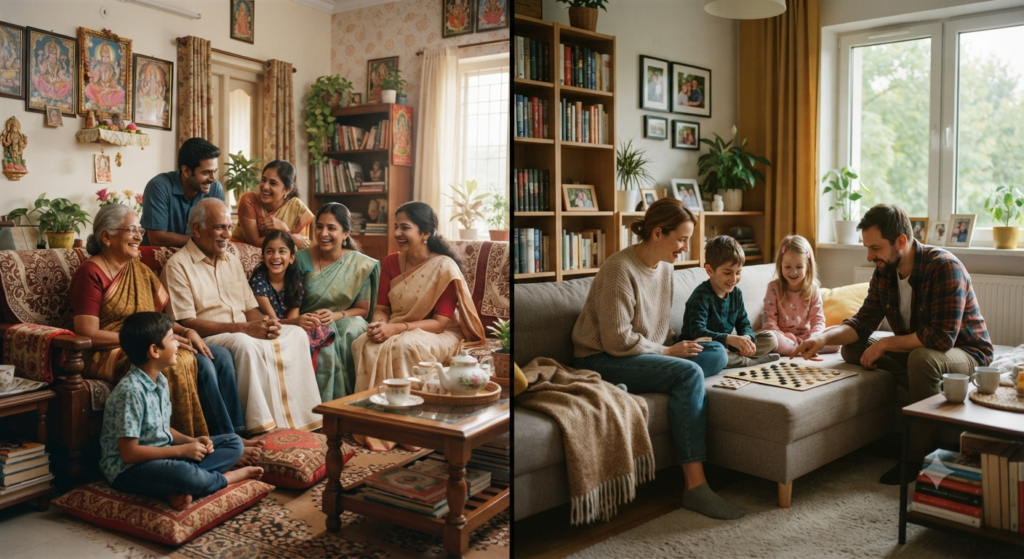
Attitudes towards relationships before marriage can differ, too. In Poland, live-in relationships and having children before marriage are generally more socially accepted. In India, these situations may face family or social disapproval, particularly in more conservative communities, although attitudes are changing in some urban areas and among younger generations.
From what I have observed, the difference is not necessarily about how much families care, but how they express their closeness. In India, family involvement and living across generations can be more common, while in Poland, family connections often exist alongside greater independence and personal space.
Communication and Greetings
Communication styles and greetings can feel different when you move from one culture to another. However, people have different personalities, so these observations may not apply to everyone.
In Poland, “Dzień dobry” is a common and polite greeting that can be used like “Hello,” “Good morning,” or “Good day.” A handshake is common in formal situations, while friends and family members may greet each other with a hug or a kiss. The type of greeting usually depends on the relationship and social situation.
In India, “Namaste,” with both hands folded, is a familiar traditional greeting. Greetings vary according to the region, age, relationship, and social setting. Friends and family members may greet each other with hugs, while in formal situations people may use a handshake or a simple verbal greeting.
One difference I have noticed is that conversations in India can sometimes begin more easily with people we have just met, while in Poland people may take a little more time to become familiar with someone. However, this varies from person to person. I have met very friendly and talkative people in Poland, just as I have met quieter and more reserved people in India.
I have also experienced a few Polish people greeting us with “Namaste,” which was a lovely surprise for me.
Privacy and Discussing Personal Matters
One cultural difference I have noticed between India and Poland is how people approach personal questions. In many Indian social circles, asking about someone’s marriage, children, salary or family life is considered a normal way to start a conversation or show interest. Relatives, friends and even acquaintances may ask such questions without intending to be intrusive.
In Poland, people may be more reserved when discussing personal matters, particularly with those they do not know well. Questions about income, relationships or family decisions may be considered private. People often share personal information when they feel comfortable rather than discussing it openly with everyone.
Neither approach is right or wrong. Personal questions may express care in India, while people in Poland may place greater importance on privacy. Living between these cultures has taught me to respect different boundaries and communicate thoughtfully.
Food and Eating Habits
Food is one of the most noticeable cultural differences between countries. Ingredients, flavours, meal patterns, and eating habits can vary greatly.
Traditional Polish cuisine includes pierogi, soups, potatoes, bread, meat, fish, and vegetables. Lunch may include soup followed by potatoes, meat or fish, and vegetables or salad. Dinner can be lighter, such as sandwiches or eggs, while fruit, yoghurt, and cakes are common snacks.
One interesting difference I noticed concerns fish. In Poland, fish is not considered vegetarian, but it plays an important role in traditional Christmas Eve celebrations. On 24 December, families gather for a special dinner called Wigilia, which traditionally includes fish, especially carp or herring, alongside other festive dishes. The meal is traditionally meat-free, reflecting Polish Christmas customs and Catholic traditions.
Indian food habits are different in many ways. Rice, roti, chapati, vegetables, dal, and curries are common in many parts of India. Spices, herbs, and regional traditions play an important role in everyday cooking. Vegetarian food is widely available, while non-vegetarian dishes, including chicken, fish, and meat, are also popular in many regions. Eating habits vary across regions, communities, and families.
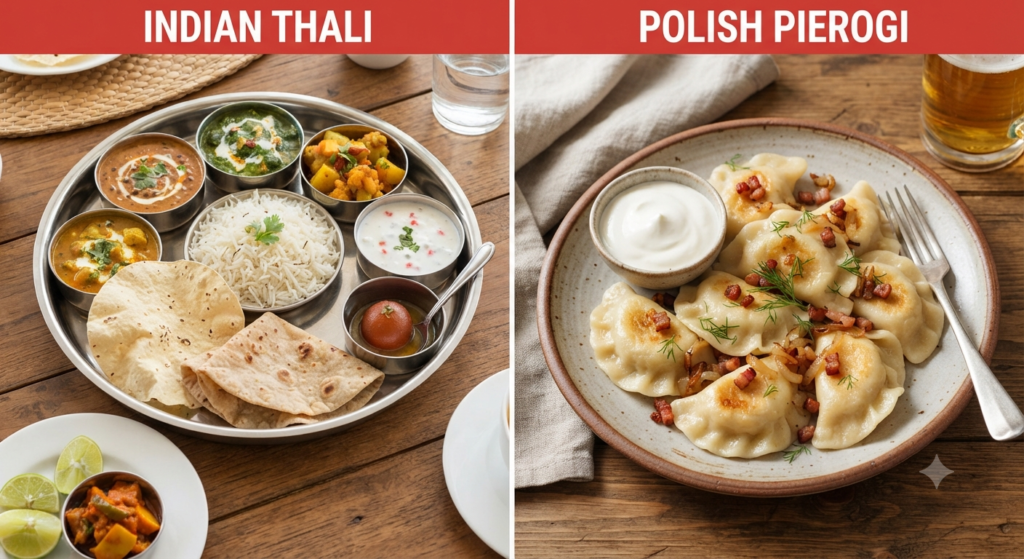
Despite these differences, food remains an important part of family life and celebrations in both countries, bringing people together through shared meals and traditions.
Festivals and Religion
Festivals are important in both Poland and India, although their traditions and celebrations differ.
In Poland, Christmas and Easter are major celebrations when families gather and share traditional meals. I found All Saints’ Day on 1 November particularly meaningful. Many people visit cemeteries, remember loved ones, and light candles at their graves. Seeing thousands of candles illuminating the cemeteries left a lasting impression on me.
New Year’s Eve on 31 December is another lively occasion, with parties, music, and gatherings. People sometimes gather in city centres to welcome the new year, accompanied by fireworks.
Living in Kraków has also allowed me to experience events such as the Dragon Parade. I have also come across Festiwal Kolorów, a colour festival inspired by India’s Holi. It began in Warsaw in 2013 and later expanded to cities including Kraków, bringing people together through music, dancing, and colourful powders.
India has a diverse festival calendar, including Diwali, Holi, Ganesh Chaturthi, and Navratri. Growing up in India, I experienced celebrations filled with food, music, decorations, prayers, and gatherings with family and friends. The country’s many religious and cultural communities contribute to its diverse festival traditions.
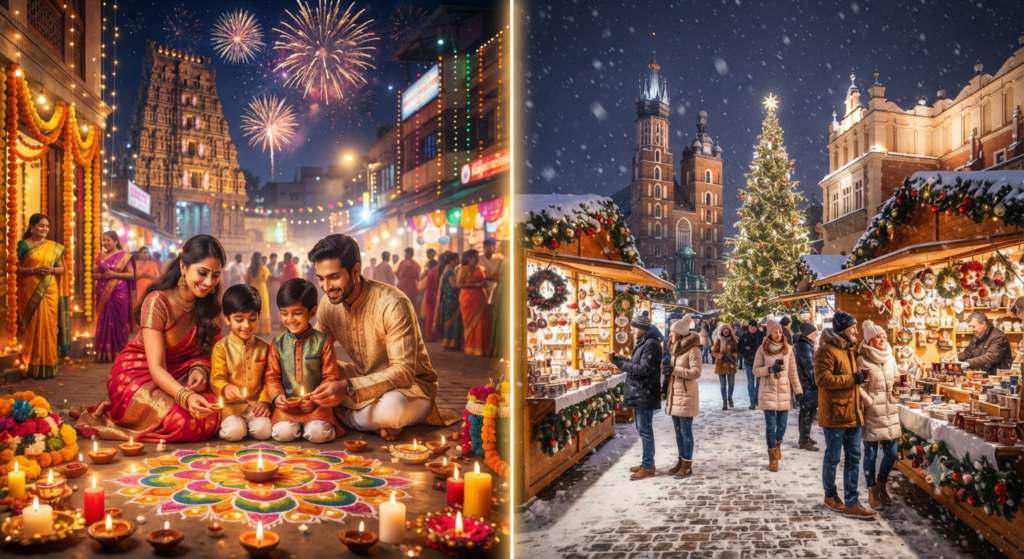
My experience has shown me that family values are important in both India and Poland, even though traditions and ways of expressing them may differ.
Clothing and Climate
One of the most noticeable changes I experienced after moving to Poland was the climate.
Poland has four distinct seasons: spring, summer, autumn, and winter. Winter was one of the biggest changes for me. Temperatures can drop significantly, snowfall is common, and the days become shorter, with fewer hours of daylight. People wear thick coats, boots, scarves, gloves, and several layers of clothing to protect themselves from the freezing cold.
The changing seasons also influence daily life. In spring, people start spending more time outdoors. Summer brings life to parks and outdoor cafés, while autumn transforms the landscape with colourful leaves.
Clothing choices change with the seasons in Poland. In winter, people wear warm layers, while summer brings lighter clothing such as shorts, sleeveless tops, and dresses. Sunny days also encourage people to spend more time outdoors.
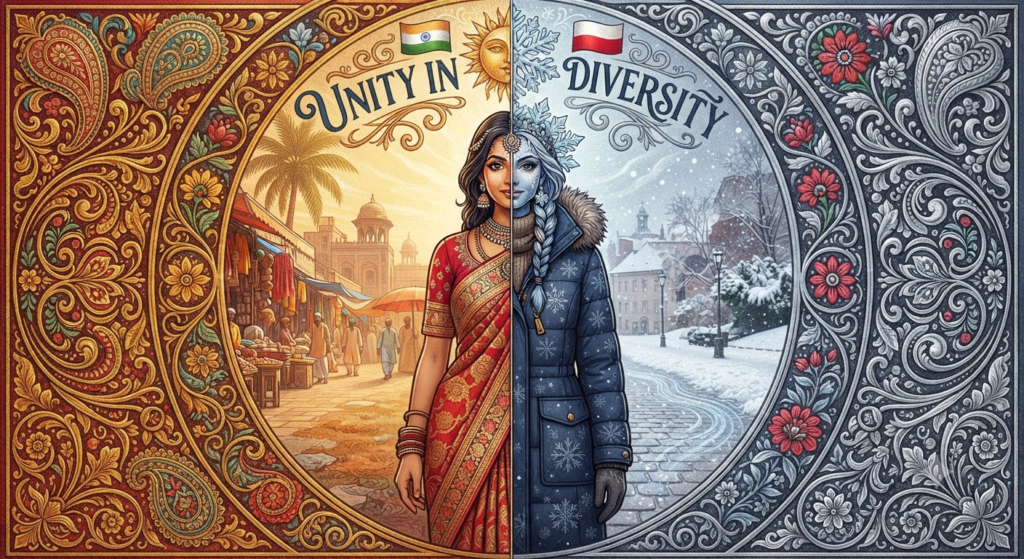
Another difference is the attitude towards clothing. In Poland, wearing short dresses or other revealing summer clothes is generally socially accepted and is not considered a cultural taboo. People have considerable freedom to choose what they wear according to their comfort, personal style, and the weather.
India’s climate varies greatly across regions. The country is commonly described as having three main seasons: summer, the monsoon, and winter. The monsoon brings seasonal rainfall that is important for agriculture and daily life. While some parts of India experience very hot summers, others have cooler climates, and winters can be quite cold in certain regions.
Growing up in India, I was more accustomed to warmer weather and lighter clothing. Clothing choices also vary according to the region, season, local traditions, and individual preferences. In some communities, modest clothing is culturally preferred, and short dresses may attract more attention or face social disapproval. However, attitudes differ considerably across India, particularly between communities and generations.
Moving to Poland has helped me understand how climate, personal comfort, and cultural attitudes influence clothing choices. It has also shown me that what feels unusual in one culture can be perfectly ordinary in another.
Parenting and Children
Parenting is another area where I have noticed cultural differences, particularly in how children are guided and taught to behave.
In Poland, parents often encourage children to participate in everyday activities from an early age. Children may be expected to follow rules, respect personal boundaries, and behave appropriately in public places. I have also noticed that parents often explain rules and encourage good behaviour rather than relying on physical punishment.
I have observed how children are included in outdoor activities and everyday routines. Families can often be seen walking with their children, visiting parks, or spending time outdoors together. Children are given opportunities to explore their surroundings while learning to respect others and shared spaces.
In India, parenting can place considerable emphasis on education, academic performance, and discipline. Parents often pay close attention to their children’s studies and may invest significant time and effort in helping them succeed academically. However, parenting styles vary widely across families, regions, and communities.
Both approaches have their strengths: independence builds confidence, while parental guidance offers support. Ultimately, parents in both countries want their children to grow up happy, confident, and prepared for life, even if their parenting styles differ.
Work and Punctuality
Work culture is another area where I have noticed differences.
In Poland, I have observed a strong emphasis on punctuality, planning, and work-life balance. People generally arrive on time for meetings and appointments. In my experience, doctors often see patients close to their scheduled times. I have also noticed that shops follow their stated closing hours. If a shop closes at 9 p.m., staff generally stop serving customers around that time, reflecting the importance of respecting working hours and personal time.
I also appreciate the respect shown for different types of work in Poland. In my experience, honest work deserves respect regardless of a person’s position or profession. Every job contributes to society and deserves dignity.
In India, work culture often emphasises ambition, career growth, hard work, and dedication. In some workplaces, employees may work beyond regular hours to meet deadlines or professional expectations. I have also noticed that social status can influence how professions are perceived. Jobs associated with high qualifications, income, or prestige may receive greater recognition than some other occupations. I believe every honest profession deserves equal dignity and respect, regardless of income or social status.
These are my personal observations, and experiences vary across both countries. For me, Poland has highlighted the importance of punctuality and professional boundaries, while India has taught me determination, resilience, and adaptability.
Public Etiquette and Cleanliness
Public behaviour and civic responsibility are among the differences I noticed most clearly after moving to Poland.
In Kraków, I have observed a strong emphasis on keeping public spaces clean, sorting waste correctly, queuing, and respecting shared areas. People generally try to follow public rules and avoid disturbing others.
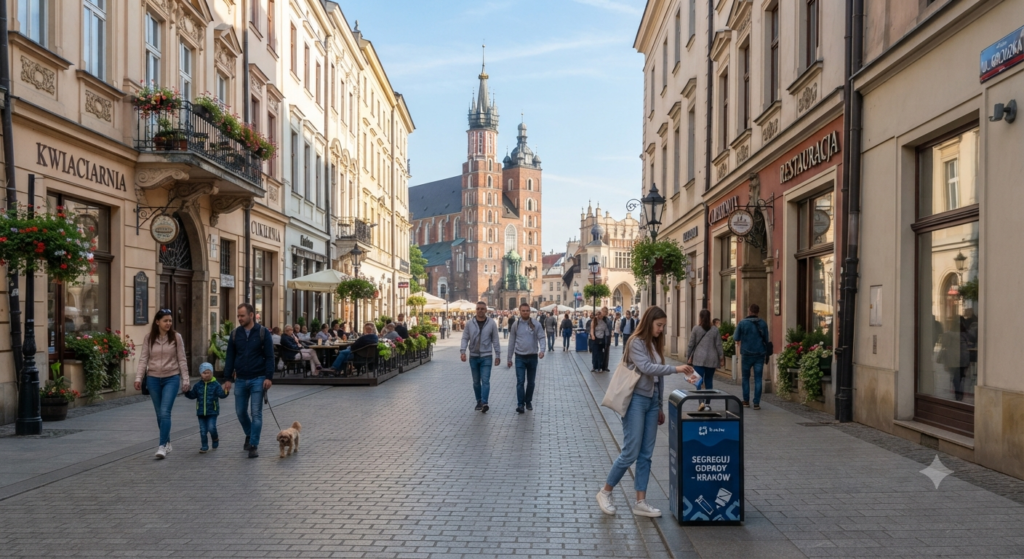
In India, the situation varies significantly from one place to another. Some public spaces face challenges such as littering, waste management, and overcrowding. At the same time, many communities and individuals are working to improve cleanliness and civic responsibility.
Living in Poland has shown me how everyday actions, such as sorting waste and keeping shared spaces clean, contribute to cleanliness. It has reinforced my belief that public spaces are a shared responsibility, though practices vary across both countries.
Hospitality and Social Life
Hospitality and social life reflect important aspects of culture, although the ways people welcome guests and build relationships can differ between Poland and India.
In Poland, social visits are often planned in advance, whether for a meal or time together. In my experience, people have generally been polite, respectful, and willing to help. Although some may initially seem reserved, this does not necessarily mean they are unfriendly.
In India, hospitality has deep cultural roots. The traditional saying “Atithi Devo Bhava” means “The guest is equivalent to God.” Offering water, tea, snacks, or a meal is a common way to welcome guests and make them feel comfortable.
Social visits in India can be more spontaneous, with friends and relatives sometimes dropping by without much advance planning. Gatherings are often lively, filled with conversations, shared meals, and celebrations. In Poland, people may prefer arranging visits beforehand, while socialising often takes place during planned meals, outings, and special occasions.
Although hospitality and social life may differ between the two countries, both have their own ways of welcoming people and building relationships.
What Can India and Poland Learn From Each Other?
Living in Poland has helped me see my own culture from a different perspective. India has taught me the importance of family, hospitality, and community, while Poland has shown me the value of independence, personal boundaries, punctuality, and civic responsibility.
My experience has taught me that cultural differences do not have to divide people. Instead, they offer opportunities to understand one another and learn from different ways of life.
The real value of experiencing another culture lies not in deciding which is better, but in appreciating what each can teach us.
Related Articles
If you enjoyed this article, you may also like:
Transportation in Poland: A Journey Through Rules, Safety, and Accessibility