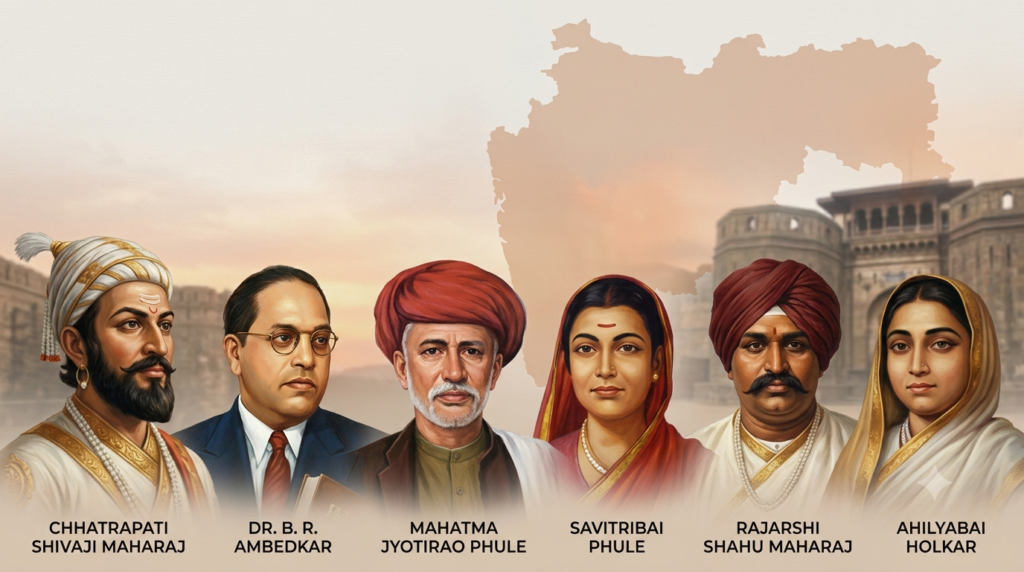
Maharashtra, a state in western India, has given us many remarkable personalities who have shaped its history and society. Among them are social reformers, rulers, saints and thinkers whose work has left a lasting impact on Maharashtra and continues to inspire people across India and beyond. These great leaders of Maharashtra are remembered through their Jayantis and Punyatithis (birth and death anniversaries), which are marked by public programmes, cultural events, processions and other celebrations.
But when we celebrate them, how much do we really know about them? Over time, we have come to associate particular leaders with particular castes and communities. Because of these labels, their anniversaries can become occasions mainly identified with the communities associated with them, rather than celebrations that bring the wider society together. We may remember their names and identities, but do we also take the time to understand the work they did, the ideas they shared and the struggles they faced?
Their backgrounds are part of their stories, but their contributions were not limited to one caste or community. Many of them worked for equality, education, social justice and the well-being of society. Perhaps we need to look beyond these labels and ask a simple question: Are we truly honouring the people we celebrate, or are we only remembering the identities we have attached to them?
How Are We Celebrating the Great Leaders of Maharashtra?
If we want to look beyond the labels attached to these personalities, we should also think about how we remember them. Jayantis and Punyatithis can be opportunities to learn about their lives and ideas, but celebrations can sometimes become more about music, dancing and entertainment than about the person being remembered.
A statue or photograph of a great personality may be decorated with garlands and placed on a vehicle. Members of the community associated with that personality may come together to take part in the procession. Young people gather around it and dance to loud music played by DJs. The procession becomes a lively public event, but how much do we actually learn about the person whose image is at the centre of it?
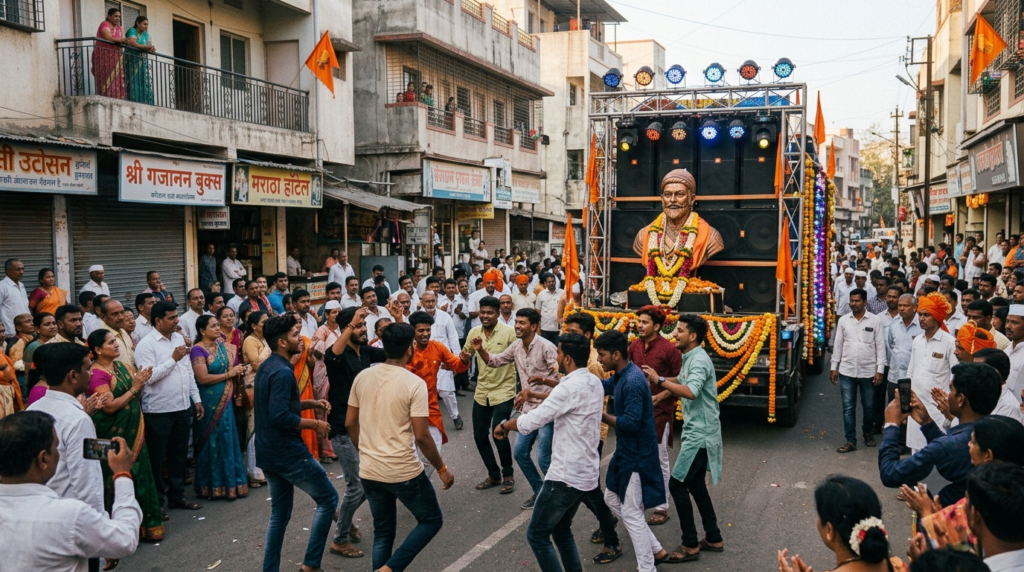
Such processions can attract a large crowd. People may come out to watch the decorated statue, listen to the music and enjoy the atmosphere. But how many of them would also attend a lecture, discussion or programme about the life and work of the person being honoured? Such programmes may not attract the same level of interest because some people may find them less entertaining or engaging than a lively procession.
There is nothing wrong with music, dancing or people coming together to celebrate. The concern arises when these become the main focus of the occasion, while the person’s life, struggles, ideas and contributions receive little attention.
What Are We Passing on to the Next Generation?
There is another side to these celebrations that deserves attention: the money collected in the name of great personalities. In many places, contributions are collected from ordinary people to organise such events. But if people are being asked to contribute in the name of a respected leader, shouldn’t we also ask how that money is being used and whether the celebration truly reflects the values of the person being honoured?
The way we organise these celebrations also makes us think about what we are teaching the next generation. Small children watch these processions. They see the decorated statue or photograph, the loud music and the young people dancing around it. As they grow up, they may learn to associate these anniversaries mainly with DJs, processions and entertainment, rather than with the person’s work and the values they stood for.
We also need to think about how we attach these personalities to particular castes and communities. If the next generation sees a great leader mainly through one identity, will they understand the wider significance of their work? Are we passing on their true legacy, or only the labels we have attached to them?
The question is not whether we should celebrate. The question is what we are celebrating and what we are passing on to the next generation. If the name and photograph of a great personality are at the centre of an event, their work, ideas and values should also be at the heart of the celebration.
When We Remember the Identity but Forget the Work
Think about how some of Maharashtra’s most well-known personalities are commonly identified. Chhatrapati Shivaji Maharaj is strongly associated with Maratha identity, Dr. Babasaheb Ambedkar with Dalit history, Ahilyabai Holkar with the Dhangar community, and Jyotirao and Savitribai Phule with the Mali community. Rajarshi Shahu Maharaj is closely connected with the non-Brahmin movement and the social history of Maharashtra.
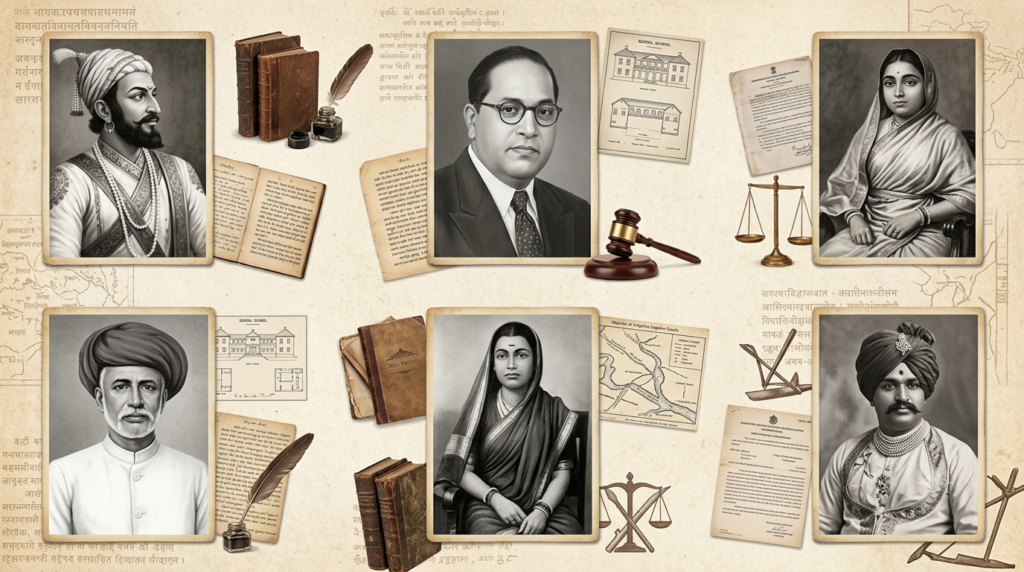
These historical and community connections are important parts of their stories. But a community label cannot tell the whole story of a person. Shivaji Maharaj’s legacy also includes state-building, administration, military organisation and governance. Dr. Ambedkar’s work extended far beyond his social background, including equality, education, justice and constitutional rights. Ahilyabai Holkar is remembered not only for her Dhangar roots but also for her administration, governance and public works.
The same is true of Jyotirao and Savitribai Phule. Their work in education and social reform had significance beyond their own community. Shahu Maharaj worked to expand education and opportunities for disadvantaged communities and challenged caste inequality. Saints and other social reformers also contributed ideas that reached beyond their social backgrounds. Sant Tukaram’s poetry addressed hypocrisy and social inequality, while Sant Gadge Baba promoted cleanliness, education and social reform. Annabhau Sathe used literature to express the lives and struggles of workers and marginalised people.
These examples show that a person’s social background may be part of their history, but it does not define the full meaning of their life and work. To understand these personalities, we need to look beyond the identity associated with them and recognise the wider contributions they made to society.
A Leader Is More Than a Community Identity
Looking beyond these labels does not mean that communities should stop feeling proud of leaders who came from their own backgrounds. These historical connections are meaningful and can help us understand the social conditions in which these personalities lived and worked.
The important distinction is between being a leader from a community and being a leader only for that community. A person can come from a particular caste or social group while their ideas and achievements have significance far beyond it.
A ruler may have governed people from different communities. A social reformer may have addressed injustice faced by a particular group while raising wider questions about equality and dignity. A writer or saint may have come from a particular social background while their words continue to reach people across communities.
Understanding a person’s background helps us understand their journey. But their actions, ideas and values help us understand their legacy. We can respect where they came from without allowing a single identity to become the limit of how we remember them.
How Can We Make These Celebrations More Meaningful?
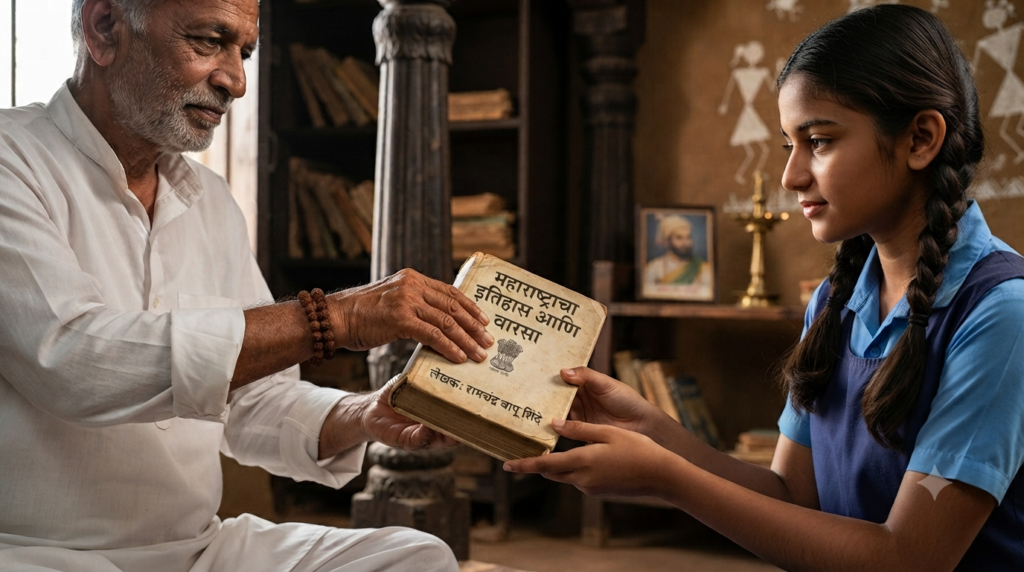
If we want these personalities to be remembered for their lives, work and ideas, we should make these things a part of the way we celebrate them. Along with processions and other celebrations, we can organise talks, discussions, plays, documentaries, exhibitions and reading programmes. These can help people learn about their lives and understand what they stood for.
Children and young people can also be given opportunities to take part. They can learn about these personalities and their work in simple and interesting ways. This can help them look beyond names and photographs and understand why these people are remembered.
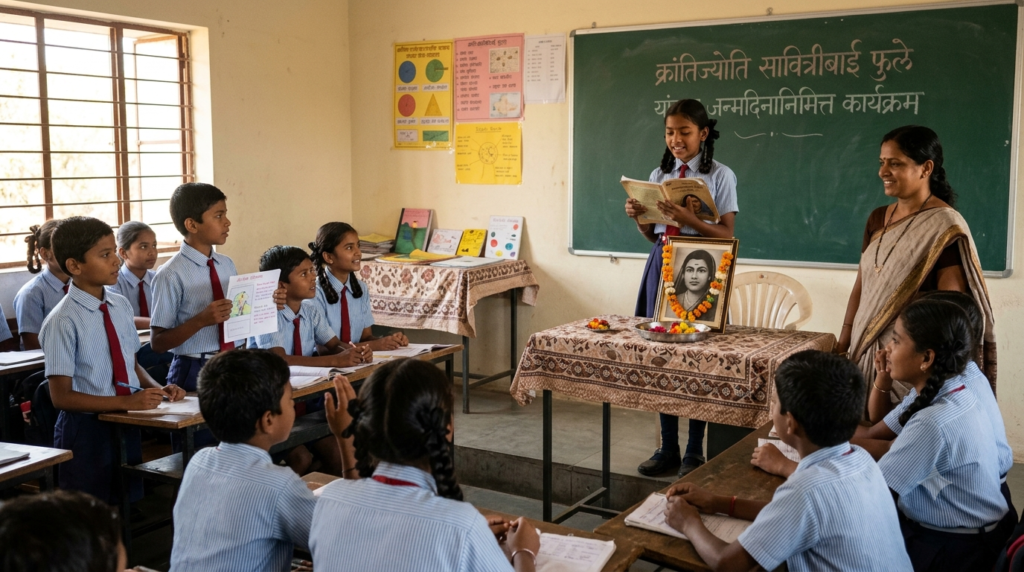
In this way, an anniversary can become more than just a day of celebration. It can also be a day to learn, think and remember their contribution to society.
This does not mean that celebrations have to stop being enjoyable. People can still come together, have fun and celebrate with enthusiasm. The point is balance—we can enjoy the celebration while also remembering the person’s life, work and ideas.
What Happens When Entertainment Takes Centre Stage?
If entertainment becomes the main focus of a celebration, we should ask what remains after the music stops and the decorations come down. A few hours of loud music, dancing and excitement may bring people together, but they may not help us understand the person being remembered.
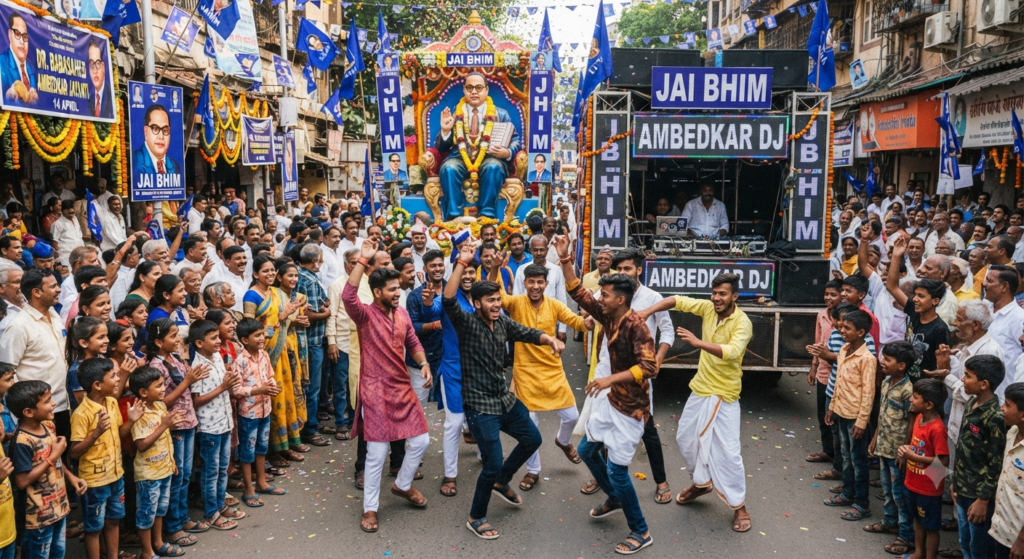
When the celebration is mostly about entertainment, the person’s life and contribution can easily become secondary. People may remember the music, the crowd and the excitement, but forget why the occasion was being held in the first place.
This can slowly change the way we remember great personalities. Their names and photographs may remain familiar, while their struggles, ideas and work become less important.
The concern is not that people should stop enjoying themselves. It is about what happens when entertainment becomes more important than remembrance. If that happens, we may celebrate the occasion every year without truly remembering the person behind it.
Remembering Our Leaders Beyond Labels
Perhaps it is time to rethink how we remember the great personalities who have shaped our society. Their birth and death anniversaries give us an opportunity to remember their lives and contributions. We should come together to celebrate these occasions without seeing these personalities as belonging only to particular castes, communities or groups.
When we come together to celebrate and remember them, let us also learn about their lives, understand their ideas and recognise what they contributed to society. A celebration may last for a few hours, but what we learn from their lives can stay with us for generations.
Their anniversaries should remind us not only of who they were, but also of the values, ideas and contributions they left behind.
So, perhaps the real question is not how we celebrate these great personalities, but how we choose to remember them and what we want the next generation to remember about them.
Related Articles
If you enjoyed this article, you may also like:
Eco-Friendly Ganeshotsav: Simple Ways to Celebrate Bappa Sustainably
Nice information 👌👌👌👌👌
Thank you so much sir! 🙏
Number ofcconcernersonalities are there who guided state and nation and lead the next generation to a good extent. They are in our heart for ever. Day by day your writing style scaling new heights. I appreciate the topics you choose for writing as these are much concerned.
Thank you so much! Your words mean a lot and inspire me to keep writing. 🙏