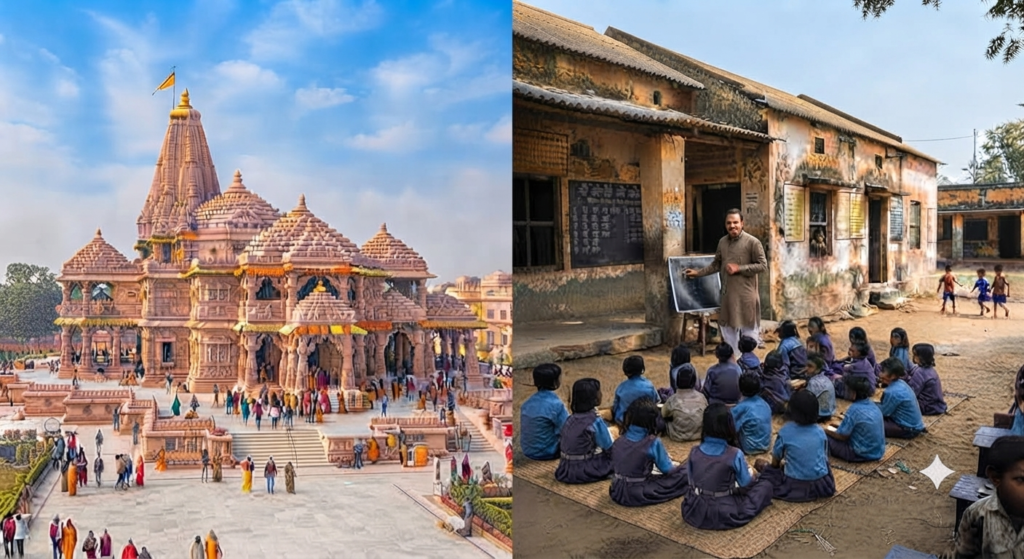
What happens when a society gives more attention to places of worship than to places where its children learn? This question has stayed with me for a long time. When I look at the education system in India, especially the situation of government schools in many rural areas, I often wonder whether we are giving education the attention it truly deserves.
Education is not only about getting a job. It teaches us how to think, develops awareness, builds confidence and opens the door to better opportunities. That is why the progress of any society depends greatly on the quality and accessibility of education.
At the same time, religion and faith are deeply connected to our lives and communities. We build and maintain temples, mosques, churches, gurdwaras and other places of worship. We contribute our time, money and effort because these places are important to our communities. They bring us together and are often closely connected with our traditions and everyday lives.
There is nothing wrong with supporting these places. But when some children still study in schools without basic facilities, I often wonder whether we are giving the same attention to the places where they learn and grow.
If we can come together to build and maintain places of worship, can we also come together to strengthen our schools?
This is not about choosing places of worship over schools or schools over places of worship. It is about asking whether we are doing enough to give every child a fair opportunity to learn and build a better future.
A School Is More Than Four Walls
What does a child really need from a school? A safe and comfortable place where learning can take place with dignity. A school should have basic facilities such as safe classrooms, clean drinking water, working toilets, electricity and other resources that support learning. India has made progress in improving school infrastructure, but these facilities are not equally available everywhere, particularly in some rural and remote areas.
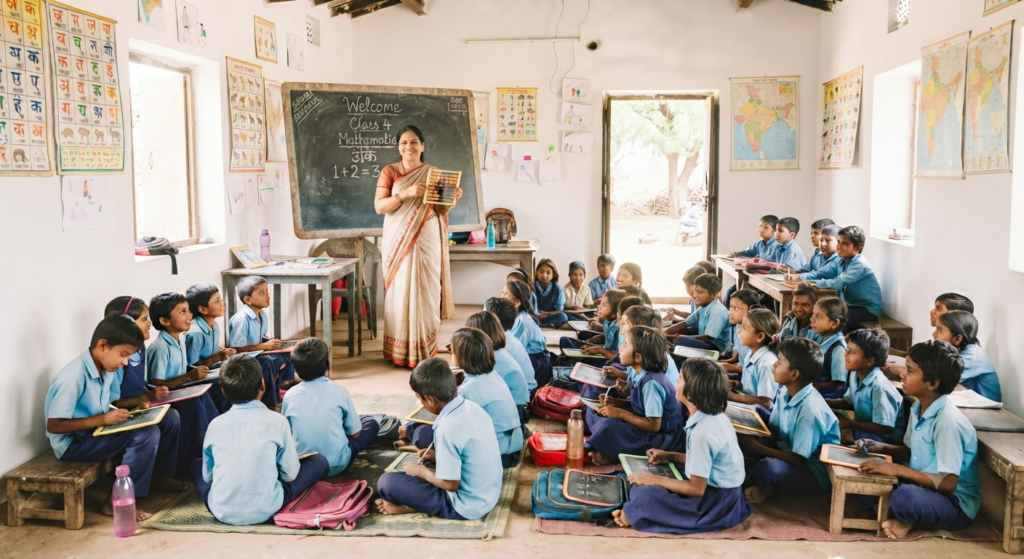
Recent media reports have also brought these challenges to public attention. In Maharashtra’s Marathwada region, the Times of India reported, “58 Beed ZP schools function without buildings, many hold classes under trees & in temples.” The report highlights the difficulties some government schools continue to face in providing proper learning spaces.
The situation is not limited to Maharashtra. A Times of India report from Rajasthan was titled, “No roofs, no toilets, no teachers: TOI check finds minuses in Rajasthan govt schools,” highlighting shortages of basic facilities and teachers in several government schools. Similar challenges have also been reported in some other states.
The challenges faced by some schools go beyond buildings and facilities. In some places, children may need to travel long distances, with poor roads and limited transport making the journey harder, especially during the rainy season.
These conditions should not become something we simply accept. Every child deserves a safe and supportive place to learn, grow and build a better future. After all, a school is more than four walls. It is where a child’s future begins.
Education Is a Right, Not a Luxury
Education should not depend on where a child is born or how much money their family has. Every child has the right to education, regardless of their family’s financial situation. Access to education should not become a privilege reserved for those who can afford better options.
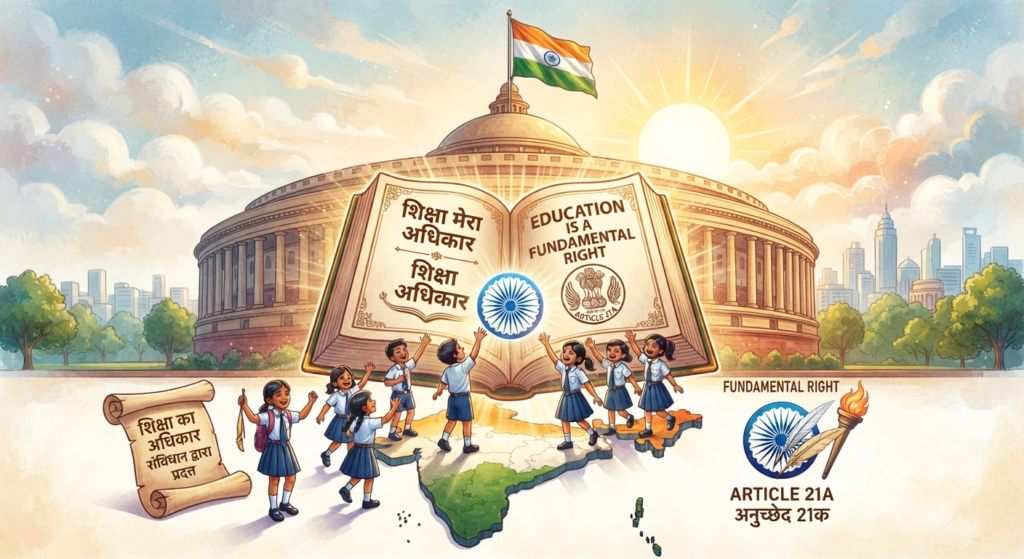
But having the right to education is only one part of the picture. Children also need an environment where they can learn well and receive a meaningful education. The opportunity to attend school should go hand in hand with the opportunity to learn with comfort, dignity and support.
This is why basic conditions at school matter. A clean toilet may seem like a small matter. So may safe drinking water, a functioning classroom, a library or sufficient learning materials. But for a child who spends several hours in school every day, these things can make a real difference to their learning experience.
The quality of education is therefore not only about what happens inside the classroom. The surroundings in which children learn also matter. A supportive learning environment can help children feel comfortable, stay engaged and make the most of their time at school.
Having access to a school is important, but simply being enrolled is not enough. Children should also have a real opportunity to learn, develop their abilities and receive an education that prepares them for life.
Education is a right, not a luxury. Every child should have a fair opportunity to receive a meaningful education, regardless of their family’s financial situation.
Choosing Private Schools, Overlooking Local Schools
The challenges faced by some schools make us think about the choices families make for their children’s education. As parents, we look for schools that provide a good learning environment, qualified teachers and suitable opportunities. For some families, this may lead them to consider private schools in India.
This does not mean that all government schools lack good facilities or that all private schools provide better education. Many government schools in India have dedicated teachers and supportive learning environments, while private schools can also vary in their quality and facilities.
For families who can afford the fees, some private schools may offer facilities or opportunities that suit their children’s needs. We all want to choose what we believe is best for our children.
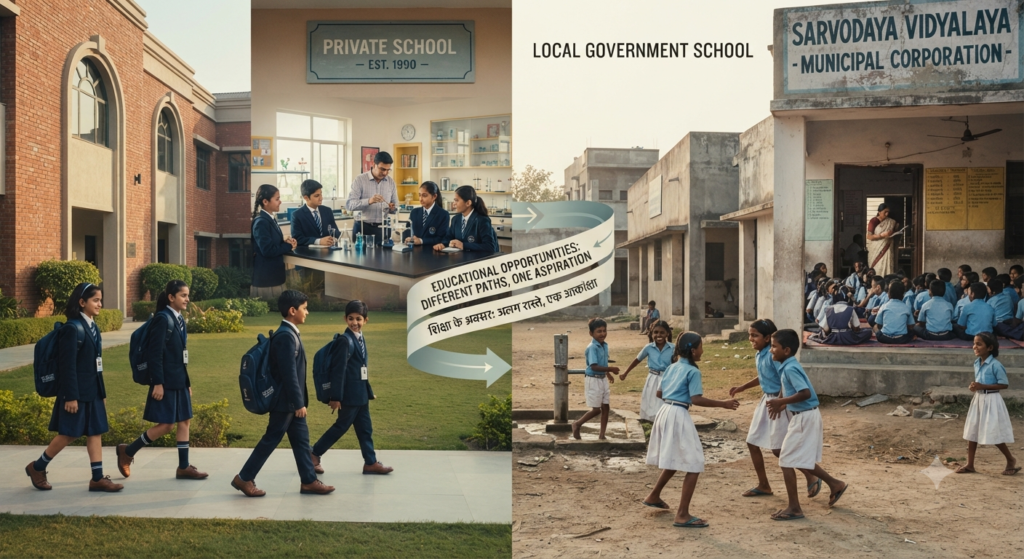
But while we make efforts to find better options for our own children, how often do we take the initiative to improve the local government schools in our areas? If we can contribute time, money and effort to religious and cultural activities, can we also come together to improve our local government schools so that children from every family, regardless of income, can have access to a good education?
This makes us think about a broader concern with the school education system in India. Choosing a private school may be an option for some families, but improving local schools can create better opportunities for many more children.
Shared Responsibility for Improving Our Schools
Improving our local government schools requires us to look beyond our individual choices and think about what we can do together. It is not the responsibility of one group alone. It requires both government support and community involvement.
The government has a major role in ensuring that schools have adequate funding, safe buildings, basic facilities, enough teachers and the resources needed for effective learning. It is also responsible for implementing education policies, monitoring schools and addressing gaps where they exist.
Communities also have a role to play. Parents, teachers, former students, local organisations and residents can identify the needs of their schools, approach the concerned authorities and follow up on improvements. Even small efforts, when people work together, can help bring attention to issues that might otherwise be overlooked.
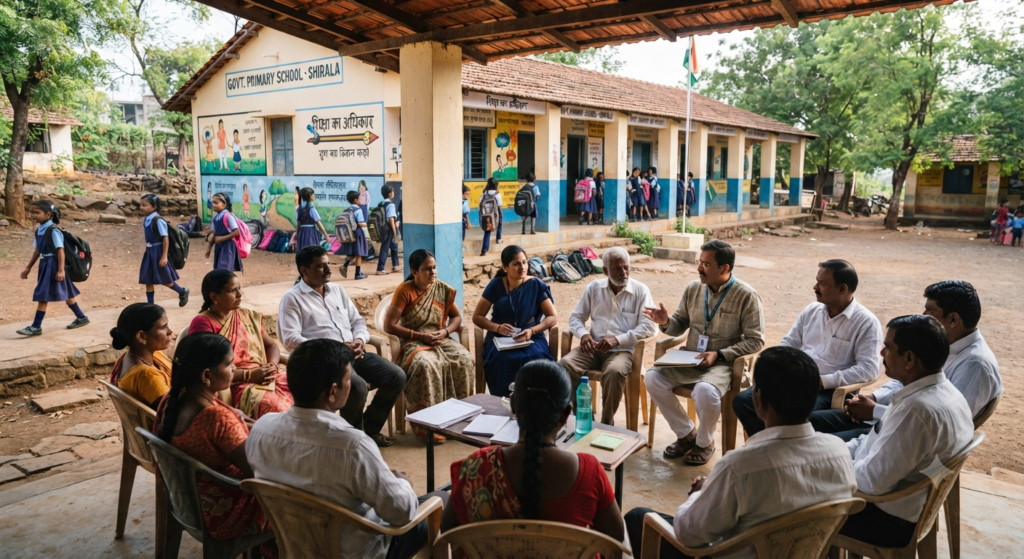
We have seen how much collective attention can come together around matters of faith and culture. The Ram Mandir in Ayodhya, for example, has deep religious and cultural significance for many people. Its construction involved contributions from devotees and donors, while the government has also invested in the wider development of Ayodhya. This shows how community participation and government support can come together around something people value.
Can we bring some of that same collective attention to education as well?
Improving education therefore requires both government responsibility and community involvement. When both work together, local schools can provide better learning opportunities for children from every background.
The Future We Build Begins in Schools
Every generation leaves something behind for the next one. We preserve buildings, traditions, festivals, stories and cultural practices because we believe they have value. Education deserves the same long-term thinking.
Education is not an expense that benefits only one generation. It is an investment whose impact can continue for decades. A child who receives a good education can gain knowledge, confidence and better opportunities. These benefits do not remain limited to the individual. They can also influence families, communities and society over time.
The National Education Policy 2020 states that “Education is fundamental for achieving full human potential, developing an equitable and just society, and promoting national development” (03). This reflects how education can influence not only individual lives but also the wider development of society.
When we talk about development, we often think about roads, buildings, technology and economic growth. But behind every area of progress are people who learn, think, create and solve problems.
Our society needs good teachers, doctors, engineers, scientists, architects, researchers and many other professionals. Behind all of them is a foundation that begins with education. When we strengthen schools, we are not simply improving buildings or classrooms. We are investing in the people who will shape society in the years to come.
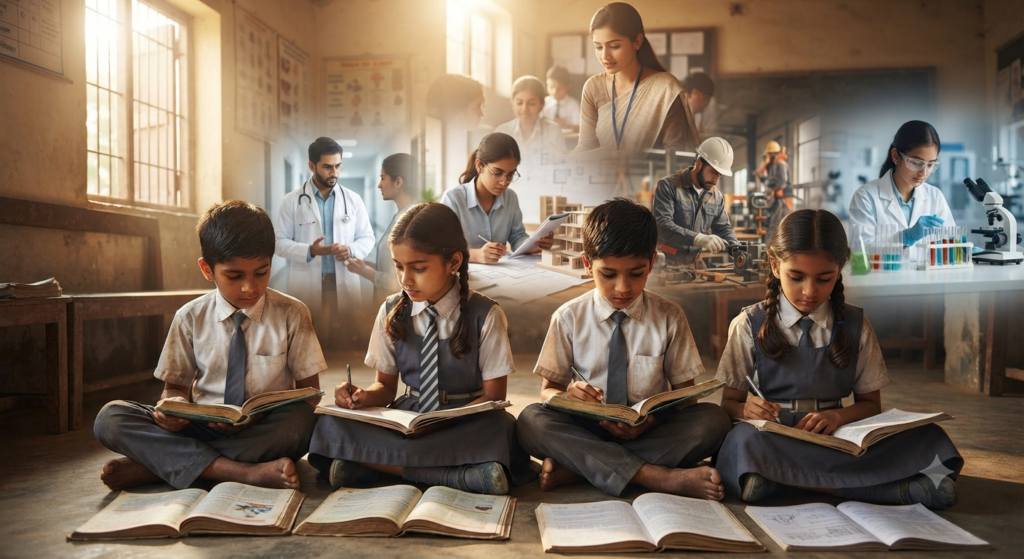
The results of education may not be visible immediately. What a child learns in a classroom today can shape their choices, opportunities and contribution for many years to come. That is why improving schools is not simply about buildings or facilities. It is about creating better opportunities for the generation that will shape our future.
In this way, supporting education today means investing in the people and the society we want to build tomorrow.
A Thought Worth Considering
We put time, effort and resources into preserving our traditions, celebrating festivals and building places of worship that are meaningful to our communities. There is nothing wrong with that. But if we care about what we leave behind, we also need to think about what we are building for the next generation.
One of the most important things we can build for the next generation is a strong foundation through education. A school may not look as grand as a place of worship, but its impact can reach far beyond its walls. It is where children gain knowledge, discover their abilities and learn to understand the world around them. Education is not only about marks, degrees or jobs. It also helps develop values, awareness and a sense of responsibility.
These qualities matter because knowledge alone is not always enough. Knowledge without values may not always lead to meaningful progress. A society needs people who can not only learn and succeed, but also think, question, create and contribute responsibly. Education gives people the wings to move forward, while values help guide where they fly.
For this reason, giving children access to good schools is an important part of building a better society. Every village should have access to a school that provides basic facilities and meaningful learning opportunities. Improving schools should therefore be a continuous effort, supported by the government as well as by people in the community.
Perhaps the same collective spirit we bring to our traditions and celebrations can also help us strengthen the schools in our communities. When we give our time, attention and resources to education, we create opportunities that can benefit not just one child, but families and communities for years to come.
We do not have to choose between our traditions and education. We can honour what we have inherited from the past while building something stronger for the future.
Perhaps, in the end, the real question is not only what we choose to preserve, but also what we choose to build for those who come after us.
Reference:
- “58 Beed ZP Schools Function without Buildings, Many Hold Classes under Trees & in Temples.” The Times of India, 5 July 2026, https://timesofindia.indiatimes.com/city/aurangabad/58-beed-zp-schools-function-without-buildings-many-hold-classes-under-trees-in-temples/articleshow/132187235.cms. Accessed 1 Oct. 2026.
- Saxena, Rajiv, and Vaishali Pitliya. “No Roofs, No Toilets, No Teachers: TOI Check Finds Minuses in Rajasthan Govt Schools.” The Times of India, 31 Aug. 2026, https://timesofindia.indiatimes.com/india/no-roofs-no-toilets-no-teachers-toi-check-finds-minuses-in-rajasthan-govt-schools/articleshow/133639423.cms. Accessed 1 October 2026
- Ministry of Human Resource Development. National Education Policy 2020. Government of India, 2020, https://static.pib.gov.in/WriteReadData/userfiles/NEP_Final_English_0.pdf Accessed 31 September 2026.
Related Articles
If you enjoyed this article, you may also like:
Great Leaders of Maharashtra: Beyond Caste and Community Labels
Eco-Friendly Ganeshotsav: Simple Ways to Celebrate Bappa Sustainably
Your article throws light on the education system in India and makes reades to ponder over it seriously.
It also highlights measures to be undertaken to elevate the system. It also appeals to the community to actively involve and contribute for the noble cause.
Thanks & Regards
Dr. P. C. Chavan
Thanks a lot sir for your thoughtful feedback and for taking the time to read my article. I’m glad the message resonated with you. 🙏
The example of Beed district is only one example. If we taken into account the whole state and nation…. it’s horrible.
I compare my own village example with this article which match perfectly. Still my village school struggling for students and English medium school of my own village flourishing. The owner of English medium school are former students of government school and now they are convincing the importance of English medium school instead of Marathi medium.
Government has made mockery of the whole education system. While comparing education system with worship places better I should keep mum…
Thank you for sharing this. Your village example shows how deeply these issues affect education at the ground level. It is unfortunate that government schools are struggling while private English-medium schools continue to grow. I truly appreciate you adding this perspective to the discussion.