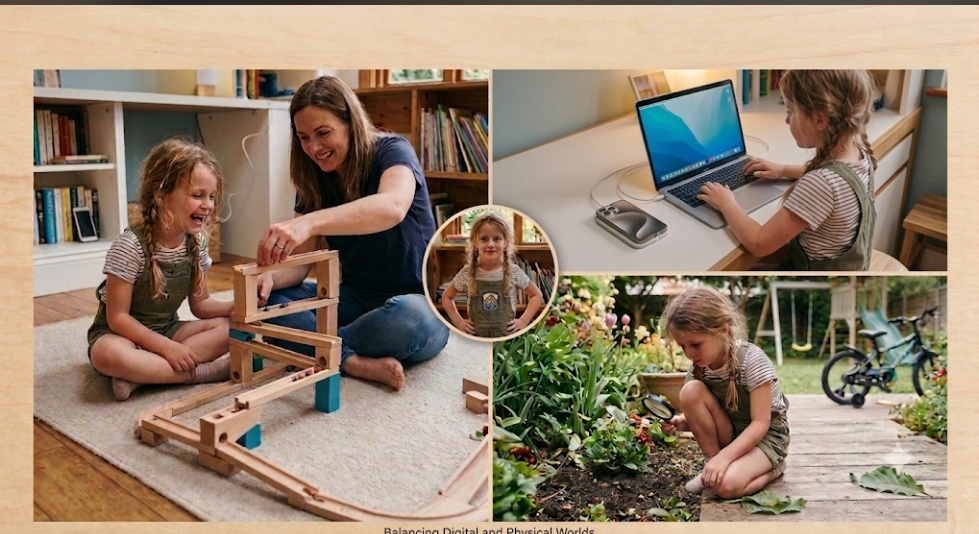
A Hospital Experience That Made Me Reflect on Childhood
Modern parenting has changed significantly in today’s digital world. As children grow up surrounded by smartphones, tablets, and digital devices, parents face new challenges in balancing screen use with learning, creativity, and meaningful real-life experiences.
A few months ago, my little girl was admitted to the hospital because of a stomach infection. During our overnight stay, I observed two very different approaches to childhood that made me reflect on how early exposure to technology can influence children’s habits and development.
I stayed with my daughter overnight in a room with three beds. My daughter and I were in the middle bed, while two Polish mothers stayed on either side with their daughters, who were receiving treatment for different health issues.
That night, I witnessed something that stayed with me.
The little girl on my left constantly asked her mother for her mobile phone. Whenever the phone was taken away, she became restless, cried, and insisted on getting it back. Eventually, her mother handed it over again to calm her down.
The little girl on my right had a different experience. She never asked for a phone. The following day, her father arrived carrying a small bag filled with interactive toys, puzzles, and children’s books. She happily spent her time playing and reading, smiling throughout the day without looking for a screen.
Watching these two children made me realise that the way children are introduced to technology can shape their habits and relationship with the world around them. One child appeared to seek comfort through a phone, while the other found enjoyment through play, books, and interaction.
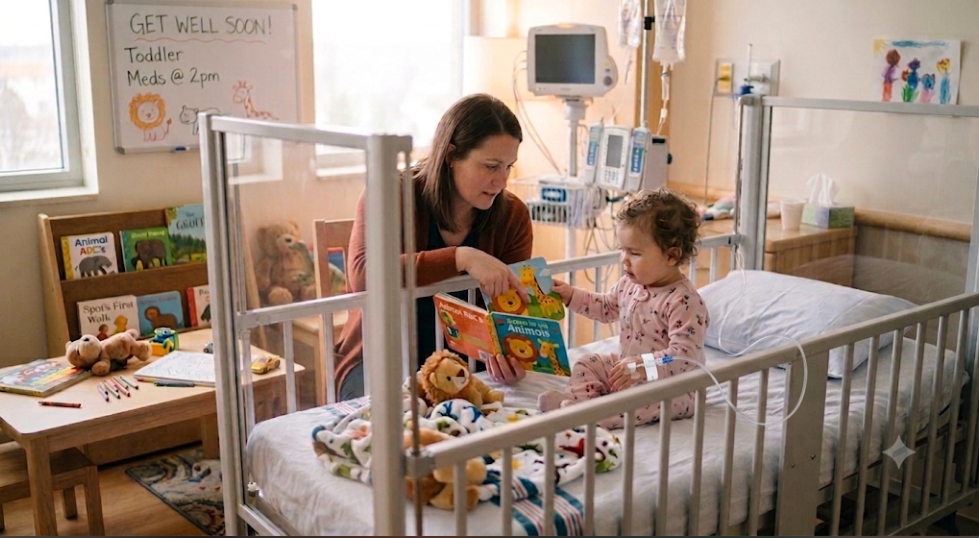
This experience reinforced something my husband and I have been trying to do with our own daughter: delay screen exposure for as long as reasonably possible and encourage other ways of learning, exploring, and developing creativity.
Technology in Childhood: Finding the Right Balance
Of course, in today’s world, completely avoiding technology is not realistic. Screens have become an important part of education, communication, and everyday life.
As the Poland Ministry of Digital Affairs notes, “We probably won’t be able to completely eliminate new technologies from our children’s lives, but we can ensure that their use is safe and doesn’t threaten their proper development.” This highlights an important aspect of modern parenting: the goal is not to remove technology completely, but to introduce it thoughtfully and at the right stage of a child’s development.
When used wisely, technology can support children’s learning and growth. However, children also need opportunities for creative play, physical activity, social interaction, and real-world experiences. A healthy balance allows children to benefit from the digital world while still developing important skills through everyday life.
The Growing Role of Screens in Children’s Lives
Today, children are growing up in a world where screens are everywhere. Mobile phones, tablets, televisions, and video games have become common parts of many children’s daily routines.
Screens can offer educational benefits and entertainment, but excessive screen use can also create challenges. Many children spend several hours a day looking at screens, sometimes choosing them over outdoor activities, creative play, or conversations with family members.

It is increasingly common to see young children becoming upset when they cannot access a phone or tablet, even when they have other opportunities to play and explore.
As screen time increases, physical activity often decreases. Many children today spend less time outdoors compared to previous generations.
The World Health Organization emphasizes the importance of active play, stating: “young children should have opportunities to participate in a range of developmentally-appropriate, safe, enjoyable play-based physical activities.” Physical play is not only important for children’s health but also supports their confidence, creativity, problem-solving skills, and social development.
This shift made me reflect on how much childhood has changed over the years.
Childhood Before Screens: Growing Up in a Simpler World
When I compare today’s childhood with my own, the difference feels remarkable.
I grew up in a farming family in India, where life was closely connected with seasons, crops, animals, and family. We did not have smartphones, social media, or constant digital entertainment. In fact, television itself was considered a luxury. DD National was our main source of entertainment, and even that was limited.
Most of our childhood was spent outdoors. We climbed trees, played in the mud, chased each other through fields, and enjoyed different traditional games with our friends. We returned home only after sunset, tired but happy after a day full of play and adventure.
During summer vacations, my siblings and I accompanied our family to the farm. We splashed in flowing water, built toys from mud, and created our own games without expensive gadgets or electronic devices.
We found happiness in simple things. A stick could become a toy. Mud could become a kitchen set. An open field could become a playground.
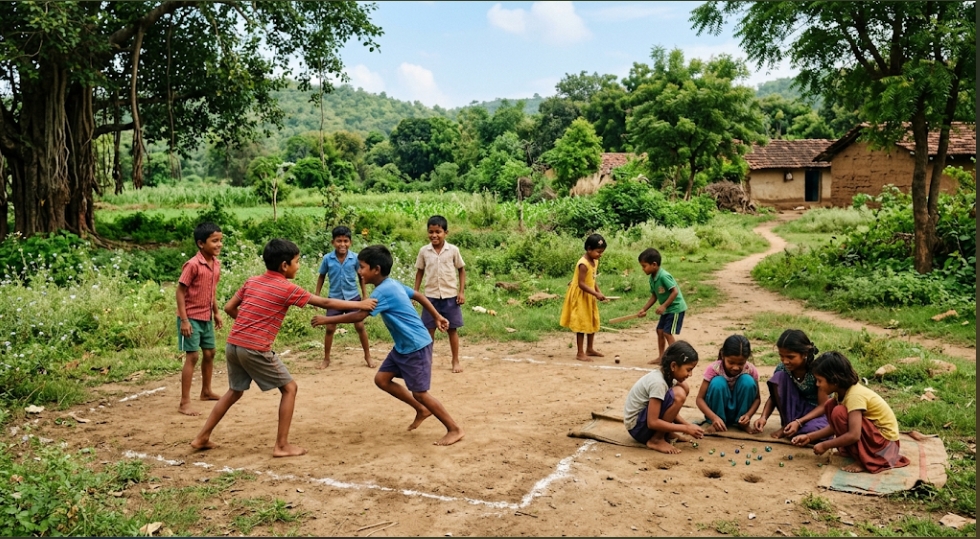
Life was simple, but it was rich in adventure, imagination, independence, creativity, and human connection.
Those experiences taught us valuable lessons. We learned how to entertain ourselves, solve problems, communicate with others, and explore the world around us without depending on technology.
Childhood was not perfect, but it gave us the freedom to discover, experiment, and grow naturally.
Family Life Then and Now: From Joint Families to Nuclear Families
Childhood was shaped not only by the absence of screens but also by the environment in which children grew up.
When I was growing up in India, many families lived in joint households where grandparents, uncles, aunts, and cousins shared everyday life. Children were surrounded by people who guided, supported, and cared for them.
Parenting was not considered only the responsibility of parents. It was often a collective effort where different family members contributed to a child’s upbringing.
Grandparents shared stories, elders passed on values, and children learned important life lessons through daily interactions with different generations.
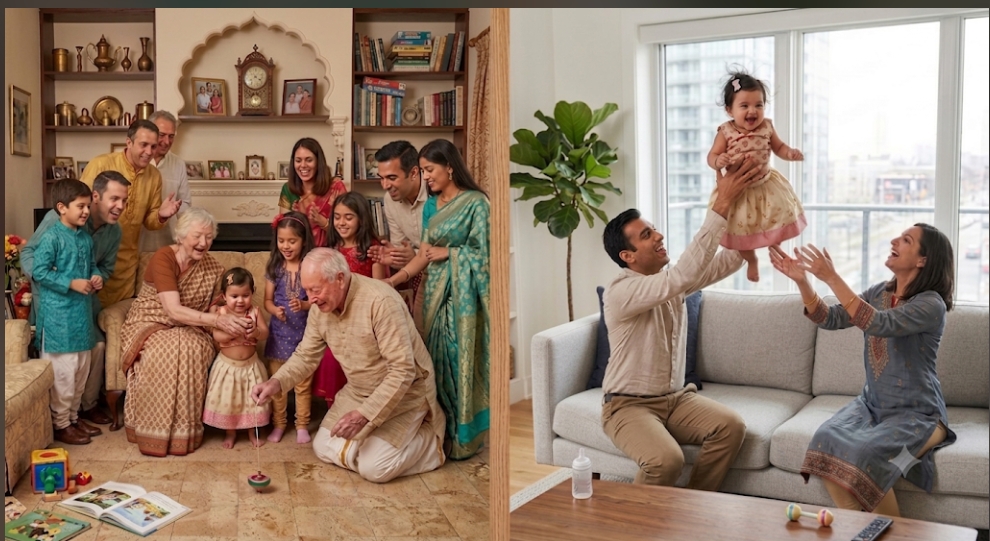
These relationships helped children develop a sense of belonging, responsibility, and connection with their families.
Today, many families prefer nuclear households because people value privacy, independence, and personal space. This lifestyle has many advantages, but raising children without the support of an extended family can sometimes be challenging.
Many parents today manage childcare, household responsibilities, careers, and emotional support mostly on their own. Without grandparents or relatives nearby, the responsibility of raising children can feel physically and emotionally demanding.
However, modern families have also created new opportunities for children. Parents today are generally more informed, more educated, and more aware of children’s emotional and developmental needs.
Modern Parenting in the Digital Age: Opportunities and Challenges
Modern parenting has brought many positive changes. Children today have access to better healthcare, education, technology, extracurricular activities, and learning resources than previous generations could have imagined.
Parents now have more knowledge about child development, nutrition, emotional well-being, and creating supportive environments for children.
Technology has also opened doors to new learning opportunities. Children can explore different subjects, develop skills, and access information from around the world.

However, every advantage comes with its own challenges.
While technology can support learning, excessive screen use may reduce opportunities for outdoor play, creativity, imagination, and real-life interaction.
Outdoor games are often replaced by mobile games. Reading books may be replaced by watching videos. Family conversations can sometimes be interrupted by digital distractions.
The challenge for parents today is not choosing between technology and traditional childhood. It is finding the right balance between the two.
The Pressure of Modern Childhood
Parenting today can be emotionally and mentally demanding.
Parents naturally want the best for their children. They invest significant time, money, and energy into education, hobbies, health, and personal development. They want their children to succeed and provide them with every possible opportunity.
However, many parents also experience constant pressure. They compare their children with others, worry about academic performance, and fear that one wrong decision could affect their child’s future.
Academic expectations often begin at an increasingly younger age. Children may attend multiple classes, activities, and competitions before they fully understand their own interests and abilities.
In trying to prepare children for tomorrow, parents sometimes unintentionally take away the joy of today.
A childhood filled with constant expectations can leave little room for curiosity, creativity, resilience, and simple happiness.
Children need time to play, explore, make mistakes, and discover who they are. Childhood is not only preparation for adulthood; it is also a precious stage of life that deserves to be enjoyed.
The goal of modern parenting is not to create a perfect child, but to support children as they grow into confident, kind, and independent individuals. By combining the wisdom of the past with the opportunities of the present, parents can help children build a balanced and meaningful childhood.
References:
- Poland, Ministry of Digital Affairs. “Małe dzieci i ekrany [Young Children and Screens].” Gov.pl, 30 May 2023, https://www.gov.pl/web/cyfryzacja/male-dzieci-i-ekrany. Accessed 6 July 2026.
- World Health Organization. Guidelines on Physical Activity, Sedentary Behaviour and Sleep for Children under 5 Years of Age. World Health Organization, 2019, https://iris.who.int/server/api/core/bitstreams/bfce7d1e-43d8-4e28-ba1b-8f6cf9da2661/content. Accessed 6 July 2026.
Related Article:
If you enjoyed this article, you may also like:
Very good writing Keep it up 👍👍👍👍
Thank you so much! 😊 Your encouragement means a lot to me. ❤️
kamble.sanjay77@gmail.com
Very nice
Thank you so much! 😊 Really appreciate it! ❤️
Very Informative and Knowledgeble
Thans! 😊 I’m glad you found it informative and useful.❤️
Very nice writing..👌
That’s so kind of you to say! 😊 Truly grateful for your encouragement. 🌷
A thoughtful and insightful article. It beautifully reminds us that while technology is essential, children also need play, books, family time, and real-life experiences. A balanced approach to parenting is the key to raising confident and happy children. Well written Madam!
Thank you so much for this beautiful reflection! 🌷 I truly appreciate your thoughtful words. Finding that balance is something I believe makes parenting both meaningful and joyful. ❤️
You are revealing new aspects of Poland. Your experience in hospital sided by two different behaving children is a good lesson to learn for me son. Since then he be with mobile less time.
It’s a good eye opening article.
Thank you so much! ❤️ I’m truly glad the article could make you reflect on screen time and bring a positive change. Your words mean a lot to me. 😊
Pingback: Dowry System in India: Its Impact on Women and Families