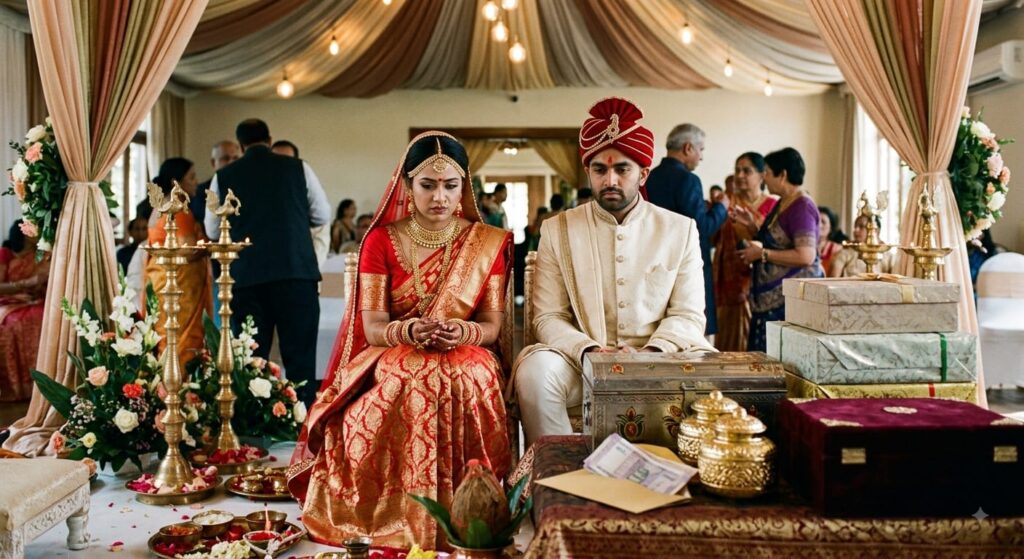
Marriage is often seen as the beginning of a new chapter in a woman’s life, as she leaves the familiar surroundings of her parental home and begins a new life with new relationships, responsibilities, and experiences. But what happens when that new beginning comes with demands for money, property, or gifts? The recent Vaishnavi Hagawane dowry death case brings this painful question to the forefront and highlights the continuing reality of the dowry system in India. In a report for The Times of India, Vishwas Kothari wrote, “The case created a major furore in the state over allegations that Vaishnavi was being subjected to dowry harassment and domestic violence.”
Sadly, this is not an isolated incident. Many women continue to face harassment, violence, and even death because of dowry-related issues. But what exactly do we mean by dowry? In simple terms, it can include money, property, jewelry, vehicles, gifts, or other valuable items given to the groom or his family at the time of marriage. Although giving or taking dowry is illegal under Indian law, the practice still continues in many parts of India.
How the Dowry System in India Contributes to Gender Inequality
The dowry system can contribute to gender inequality by influencing how families view daughters and sons. In some traditional families, daughters may be seen as having a future financial responsibility because they are expected to marry and move to their husband’s home. Sons, in contrast, have traditionally been expected to remain with their parents and support them in old age.
When these expectations are combined with dowry, having a daughter may be seen as an economic burden, while having a son may be viewed as an advantage. Such beliefs can lead to discrimination against girls and affect how they are valued within their families and society.
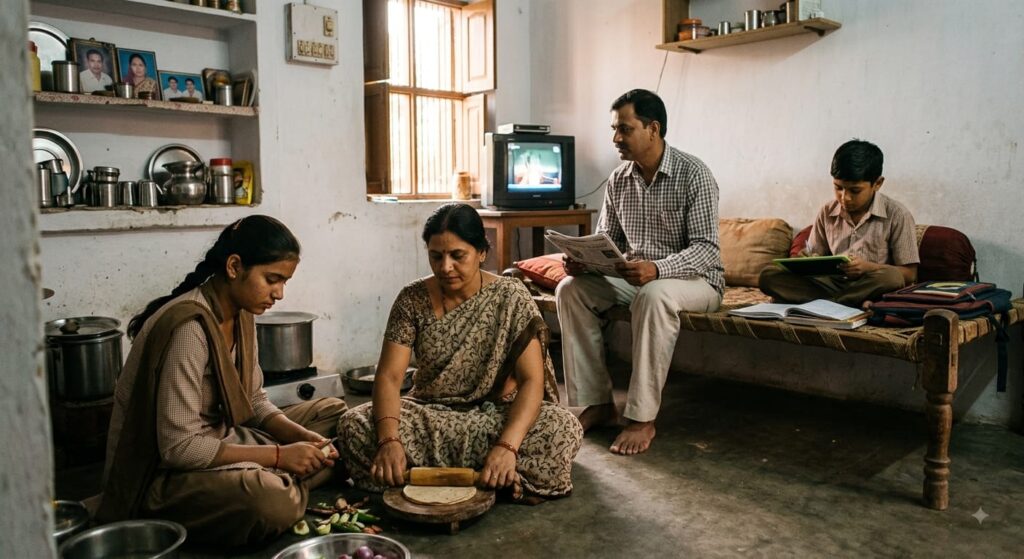
The financial burden of dowry can add another layer of difficulty for families. Many spend years saving money, taking loans, or even selling property to meet dowry demands. For poor and middle-class families, this can become a long-term financial struggle. In some cases, parents sacrifice their own needs and dreams to meet these social expectations, showing how dowry can affect not only women but entire families.
Dowry Harassment and Violence Against Women
The pressure created by dowry does not always end after marriage. In some cases, these demands continue even after the wedding, and women may be pressured to bring additional money, expensive gifts, vehicles, or property from their families. When these demands are not fulfilled, women may face emotional abuse, physical violence, humiliation, or neglect from their husbands or in-laws. Every year, numerous cases of domestic violence and dowry deaths are reported, showing that dowry can have devastating consequences for women.
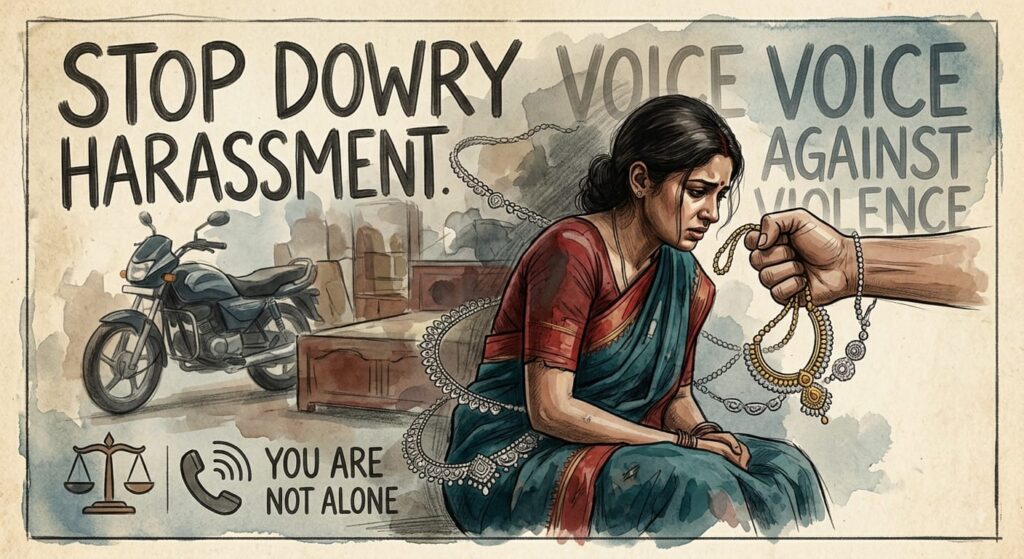
Dowry can enter a marriage in different ways. Some families openly demand money or valuable items, while others accept them when they are offered by the bride’s family. In my opinion, both attitudes help keep the system alive. Whether dowry is demanded or willingly accepted, it can turn marriage into a financial transaction rather than a relationship based on mutual respect, understanding, and equality.
How Women Can Become Part of the Dowry Cycle
What is even more troubling is that women themselves can sometimes become part of the dowry system. In some families, mothers-in-law may support or continue dowry demands. Instead of supporting and protecting their daughters-in-law, some may repeat the same pressure and mistreatment that they may have experienced in the past. It is painful to see how such suffering can become normalized and passed from one generation to another like an unspoken burden. True change will come only when both men and women choose to break this cycle and put compassion and equality before harmful traditions.
This makes me wonder why we put a price on a woman when her value can never be measured in money. We often say that women are the foundation of families. They raise children, care for their families, pursue education and careers, and contribute to society in countless ways. A woman’s love, knowledge, strength, and contribution cannot be measured by material possessions. Then why should her worth be reduced to the amount of dowry her family can give?
When Voluntary Gifts Become Social Pressure
Dowry is not always the result of an open demand for money or property. Sometimes, families give expensive gifts or household items even when the groom’s family does not directly ask for them. They may do so because of social pressure, family expectations, or fear of being judged by others. What appears to be a voluntary gift may therefore not always be a completely free choice.
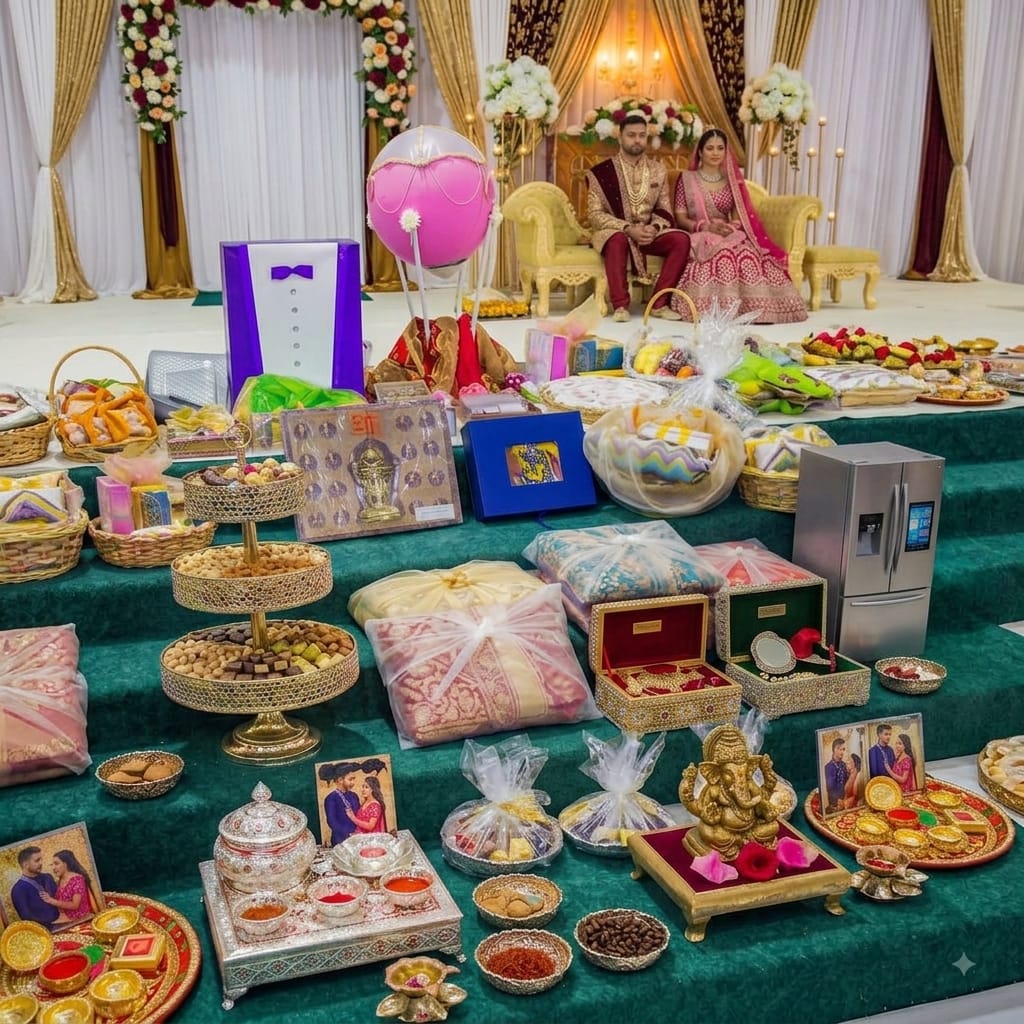
This idea is reflected in Suparna Soni’s observation that, “The voluntary aspect of the practice hardened into compulsion for parents of young daughters to make a large payment to the groom’s family in order to get their daughter married” (3). This shows how a tradition that may have started as a voluntary gesture can gradually become a social obligation.
The pressure can be especially strong when marriage is linked with family status and social reputation. Parents may feel that giving more gifts will make their daughter’s marriage look respectable or successful, even when they cannot comfortably afford them. In this way, social expectations can keep the dowry mindset alive even when there is no direct demand from the groom’s family.
We consider ourselves a modern and educated society, with a better understanding of what is right and wrong. Yet, traditions like dowry, which can be deeply harmful to women and families, continue to exist. It is disappointing that even with greater education and awareness, we have not been able to completely break free from such harmful practices.
How Can We Break the Cycle?
We often celebrate women on International Women’s Day and talk about their strength, achievements, and contributions. But once the day is over, everything often goes back to normal. If we truly respect women, that respect should not be limited to one day. It should be reflected in how we treat women every day and in the traditions we choose to follow.
Breaking the dowry cycle requires a change in social attitudes. Parents should educate daughters and sons equally, encourage financial independence, and reject dowry in all forms. Young men should take a firm stand against dowry demands, and families should see marriage as a partnership rather than a financial transaction. Society also needs to stop treating dowry as a symbol of status or prestige and recognize the harm it causes.
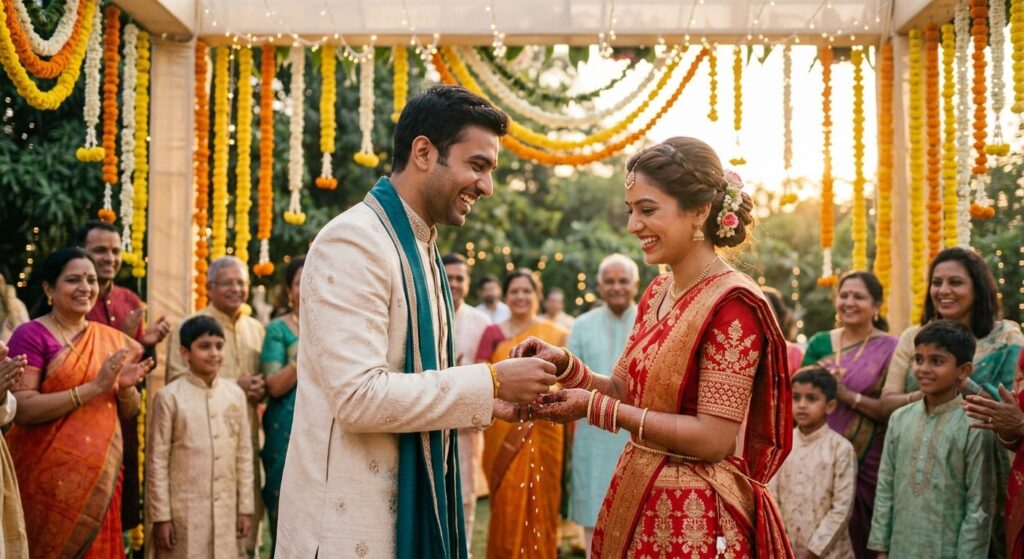
Instead of troubling or mistreating women because of dowry or other expectations, families should focus on building respectful and supportive relationships. When a daughter-in-law enters a family after marriage, she deserves the same respect, care, and dignity as a daughter. After all, when we treat someone else’s daughter with kindness and respect in our home, we create the kind of society in which our own daughters can hope to receive the same treatment in their marital homes. Respect and kindness should be the foundation of every family relationship.
A Future Free From Dowry
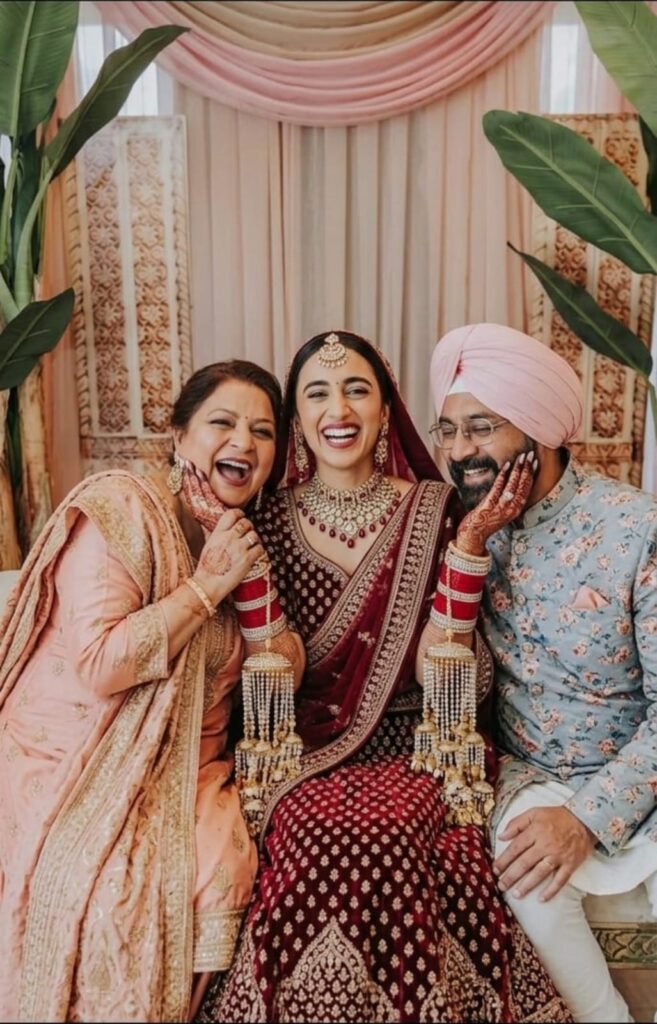
India has made progress in many fields, but true progress will come when every daughter is welcomed with joy, every woman is treated with respect, and every marriage is free from the burden of dowry.
The fight against dowry is not only a legal battle. It is also a fight for equality, dignity, and justice. Laws can punish those who break them, but lasting change will come only when families and society change the way they think about marriage, daughters, and women. A marriage should be built on love, trust, respect, and equality—not money or material possessions.
I hope we can build a future where every daughter is valued for who she is. Her worth should never be measured by dowry or material possessions.
References:
- Kothari, Vishwas. “Charges Framed against 6 Accused in Vaishnavi Hagawane Dowry Death Case.” The Times of India, 2026, https://timesofindia.indiatimes.com/city/pune/charges-framed-against-6-accused-in-vaishnavi-hagawane-dowry-death-case/articleshow/128320887.cms. Accessed 16 June 2026.
- Soni, Suparna. “Institution of Dowry in India: A Theoretical Inquiry.” Societies Without Borders, vol. 14, no. 1, 2020, https://scholarlycommons.law.case.edu/cgi/viewcontent.cgi?article=1354&context=swb. Accessed 16 June 2026.
Related Articles:
If you enjoyed this article, you may also like:
Childhood Then and Now: How Screen Time Is Changing Modern Parenting
My grandmother has taken dowry of one thousand rupees from mothers side as at that time gold was of fitty rupees per ten grams.
I remember this while reading your article.
Focused writing made think over topics choosen.
Thank you for sharing this personal memory. I’m glad my article made you reflect on the topic and brought back memories from the past. Your comment means a lot to me. 🙏
💯
Thanks Ashwini 🙏
Impact of this Dowry system is that no one want a girl child because of this. People think girls are burden on them specially in India. We can say no to this Dowry system and spread awareness.
Absolutely! Dowry has contributed to the perception that a girl child is a burden. We need to challenge this mindset, say no to dowry, and spread awareness. Thank you for sharing your thoughts. 🙏
Garbhsanskaar is important. It’s depend on parent’s culture, sanskar. Our Dharm principles and teaching is important. We should educated from childhood.
Today is separate family so parents have not got time to our child. Ethic education should be compulsory in primary school. High-school.
Thank you for sharing your thoughts. I completely agree—values and ethical education from childhood are very important. 🙏❤️